Practical Puppy Care
Knowledge Center
Detailed answers on puppy health, training, behavior, nutrition, grooming and daily routines.
Browse Collection

Hoosier Canines
One place to explore Hoosier’s resources. Browse practical puppy care, the Hoosier Bernedoodle Journal and the Bernedoodle Guide, then bring your preferences together in Build A Bernedoodle.
Start with the resource that fits your question, then follow related reading as you explore.
Practical Puppy Care
Detailed answers on puppy health, training, behavior, nutrition, grooming and daily routines.
Browse CollectionArticles
Explore Hoosier’s original articles on Bernedoodles, breeding, puppy development and life together.
Browse CollectionKnow the Breed
Understand Bernedoodle sizes, generations, colors, coats and temperament before choosing your puppy.
Browse CollectionInteractive Builder
Explore size, generation, coat color and markings with Hoosier’s interactive Bernedoodle Builder.
Browse CollectionBrowse each collection below, or search the full inventory for a specific question.
Practical Puppy Care
Detailed answers on puppy health, training, behavior, nutrition, grooming and daily routines.
Knowledge Center
Use this practical checklist to plan calm, positive Bernedoodle puppy experiences with people, sounds, surfaces, handling, and everyday places.
Read ArticleKnowledge Center
A flexible four-week plan for Bernedoodle puppy routines, name response, house training, handling, settling, and early leash skills.
Read ArticleKnowledge Center
Understand common adolescent dog changes and keep Bernedoodle training moving with easier practice, clear routines, and appropriate support.
Read ArticleKnowledge Center
A practical guide to checking Bernedoodle ears, safe cleaning habits, moisture after bathing, and signs that call for a veterinary exam.
Read ArticleKnowledge Center
Understand how parent health screening, healthy growth, body condition, and veterinary guidance support a Bernedoodle puppy’s joints.
Read ArticleKnowledge Center
Understand common puppy mouthing and use management, toy redirection, rest, and consistent responses to keep play safer.
Read ArticleKnowledge Center
Learn common reasons a Bernedoodle puppy may have diarrhea, what details to track, and which signs need prompt veterinary attention.
Read ArticleKnowledge Center
Help a Bernedoodle puppy learn to rest in a crate with gradual daytime practice, a steady bedtime routine, and planned overnight toilet breaks.
Read ArticleKnowledge Center
Compare canine DNA testing with OFA orthopedic and other clinical screening, and learn why responsible breeding programs may use both.
Read ArticleKnowledge Center
Learn what families and breeders should consider when matching a Bernedoodle puppy, including temperament observations, home routines, and size needs.
Read ArticleKnowledge Center
Use your puppy’s food label, growth, body condition, and veterinary advice to set a feeding amount that can be adjusted over time.
Read ArticleKnowledge Center
Transition Bernedoodle puppy food gradually, track appetite and stool, and know when to pause and ask your veterinarian for advice.
Read ArticleKnowledge Center
Set up a practical Bernedoodle puppy potty routine, respond calmly to accidents, and troubleshoot setbacks with consistent supervision.
Read ArticleKnowledge Center
Learn what to verify in Bernedoodle parent health records, including dog identity, test type, dates, results, and public registry details.
Read ArticleKnowledge Center
Teach loose-leash walking with short practice, rewards for a slack leash, manageable distractions, and calm changes of direction.
Read ArticleKnowledge Center
Build a Bernedoodle puppy’s alone-time skills gradually, watch for stress signals, and know when to seek veterinary behavior support.
Read ArticleKnowledge Center
Build a realistic Bernedoodle ownership budget using current local quotes for veterinary care, food, grooming, training, supplies, and emergencies.
Read ArticleKnowledge Center
See the key decisions behind a Bernedoodle litter, from parent health records and temperament to size expectations and puppy care planning.
Read ArticleKnowledge Center
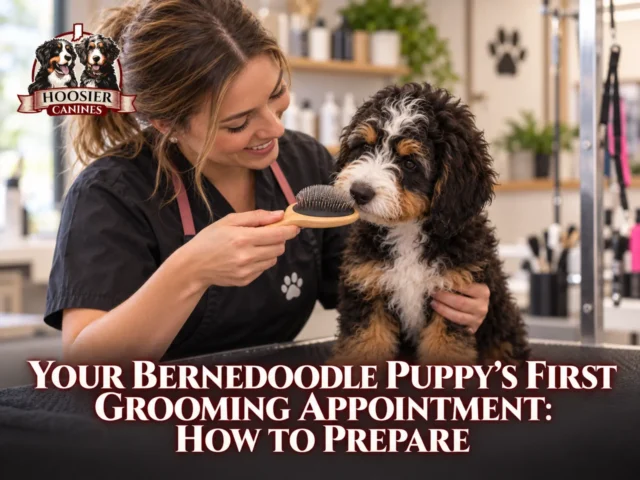
Prepare a Bernedoodle puppy for the first groom with short handling practice, a groomer conversation, and a calm plan for the visit.
Read ArticleKnowledge Center
Prepare for your Bernedoodle puppy’s first veterinary visit with a records checklist, questions to ask, and a plan for follow-up care.
Read ArticleArticles
Explore Hoosier’s original articles on Bernedoodles, breeding, puppy development and life together.
The Hoosier Bernedoodle Journal
Get a practical overview of Bernedoodle history, sizes, generations, temperament, coat expectations, training, grooming, and daily care needs.
Read ArticleThe Hoosier Bernedoodle Journal
Learn how Bernedoodle temperament, size, energy, coat, training needs, and socialization can affect their fit with children, pets, and family routines.
Read ArticleThe Hoosier Bernedoodle Journal
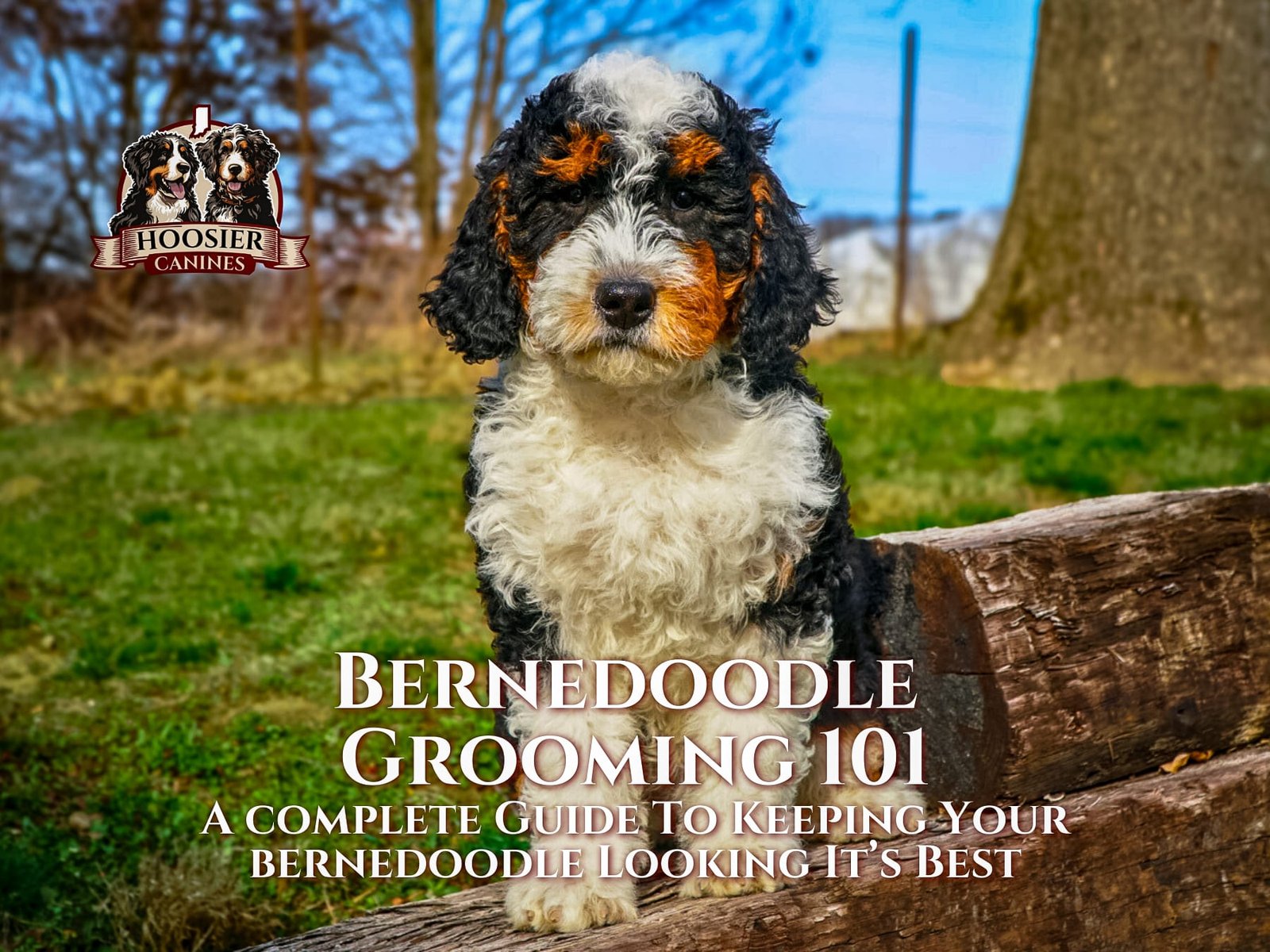
Learn how to groom a Bernedoodle with guidance on coat types, brushing frequency, mat prevention, bathing, tools, professional grooming, and haircut styles.
Read ArticleThe Hoosier Bernedoodle Journal
Explore Bernedoodle puppy growth stages, expected size ranges, development milestones, and care considerations for Standard, Mini, and smaller Bernedoodles.
Read ArticleThe Hoosier Bernedoodle Journal
Compare Bernedoodles with Goldendoodles, Labradoodles, Sheepadoodles, Saint Berdoodles, and Cavapoos across size, coat, temperament, and lifestyle fit.
Read ArticleThe Hoosier Bernedoodle Journal
Compare Bernedoodles and Goldendoodles by origin, temperament, exercise, grooming, training, health considerations, and fit for family life.
Read ArticleThe Hoosier Bernedoodle Journal
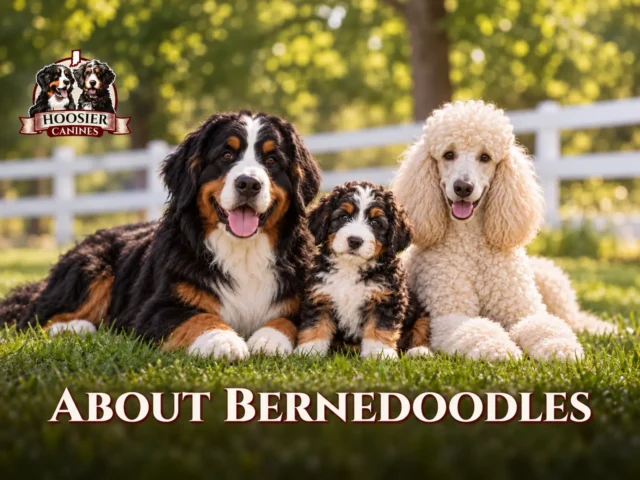
Learn how Bernese Mountain Dog and Poodle history, temperament, size, coat, and health considerations come together in the Bernedoodle cross.
Read ArticleThe Hoosier Bernedoodle Journal
Learn why F1 Bernedoodle shedding varies, how wavy and curly coats differ, what genetics can influence, and which grooming routines help manage the coat.
Read ArticleThe Hoosier Bernedoodle Journal
Get straightforward answers to common Bernedoodle questions about temperament, adult size, coats, shedding, grooming, training, exercise, and health.
Read ArticleThe Hoosier Bernedoodle Journal
Choose a Bernedoodle puppy by considering adult size, coat, temperament, energy, training time, household routine, children, pets, and breeder guidance.
Read ArticleThe Hoosier Bernedoodle Journal
Review a general first-year puppy vaccine timeline, why boosters matter, when protection develops, and which questions to discuss with your veterinarian.
Read ArticleThe Hoosier Bernedoodle Journal
Learn what a puppy umbilical hernia can look like, common risk factors, treatment options, recovery considerations, and when to contact a veterinarian.
Read ArticleThe Hoosier Bernedoodle Journal
See how Hoosier Canines uses Early Neurological Stimulation, Early Scent Introduction, and structured socialization during early puppy development.
Read ArticleThe Hoosier Bernedoodle Journal
Explore five common Bernedoodle traits—affection, intelligence, adaptability, playfulness, and loyalty—and what they can mean for everyday family life.
Read ArticleThe Hoosier Bernedoodle Journal
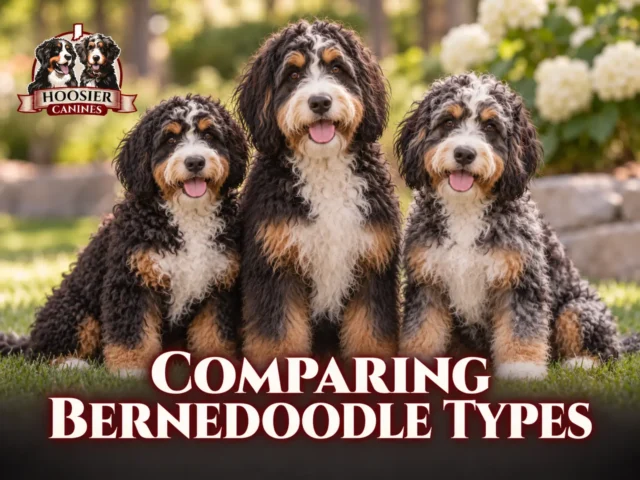
Compare Standard, Mini, and smaller Bernedoodles plus F1, F1B, and multigenerational crosses, including size, coat, temperament, and grooming differences.
Read ArticleThe Hoosier Bernedoodle Journal
Learn to read common Bernedoodle body-language cues, including posture, facial expression, movement, arousal, stress signals, and social communication.
Read ArticleThe Hoosier Bernedoodle Journal
Learn how parvovirus affects puppies, which warning signs need urgent veterinary care, how exposure happens, and how vaccination helps reduce risk.
Read ArticleThe Hoosier Bernedoodle Journal
Prepare for your Bernedoodle’s first days at home with practical guidance on supplies, routines, feeding, bonding, sleep, training, and socialization.
Read ArticleThe Hoosier Bernedoodle Journal
Home F1, F1B, F2, Multi-Gen Bernedoodles Bernedoodle generations can sound a little like alphabet soup. F1, F1B, F2, Multi-Gen. Add Mini, Standard, or Ultra to
Read ArticleThe Hoosier Bernedoodle Journal
Learn what the term Ultra Bernedoodle means, how this cross compares with other Bernedoodle types, and what to expect for size, coat, and temperament.
Read ArticleThe Hoosier Bernedoodle Journal
Learn how OFA hip, elbow, patella, and cardiac evaluations support breeding decisions, what genetic screening adds, and which records buyers can ask to see.
Read ArticleKnow the Breed
Understand Bernedoodle sizes, generations, colors, coats and temperament before choosing your puppy.
Bernedoodle Guide
Practical, realistic guidance on temperament, training, family life, exercise, health, nutrition, and care.
Read ArticleBernedoodle Guide
A colored Bernedoodle with smaller white accents that do not cover enough of the body to be considered parti.
Read ArticleBernedoodle Guide
Learn to recognize relaxed, excited, worried, avoidant, and stressed body language so you can respond before behavior escalates.
Read ArticleBernedoodle Guide
Connect everyday Bernedoodle ownership with shedding expectations, grooming responsibility, brushing, coat condition, and long-term maintenance.
Read ArticleBernedoodle Guide
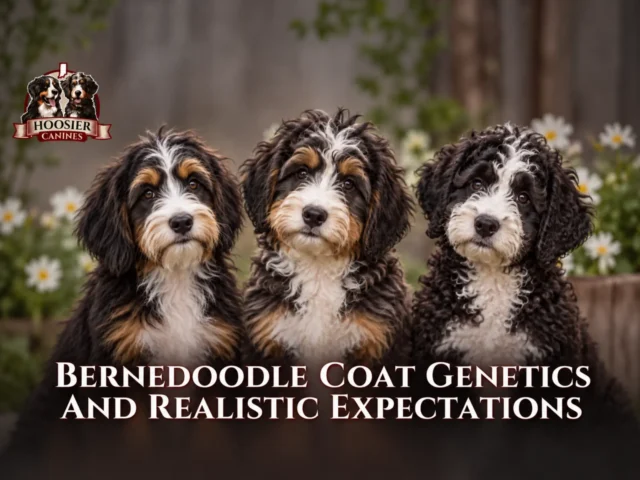
Coat appearance and shedding are influenced by multiple genes, including variants associated with furnishings, curl, and shedding. A generation label cannot replace coat testing, parent information, and family history.
Read ArticleBernedoodle Guide
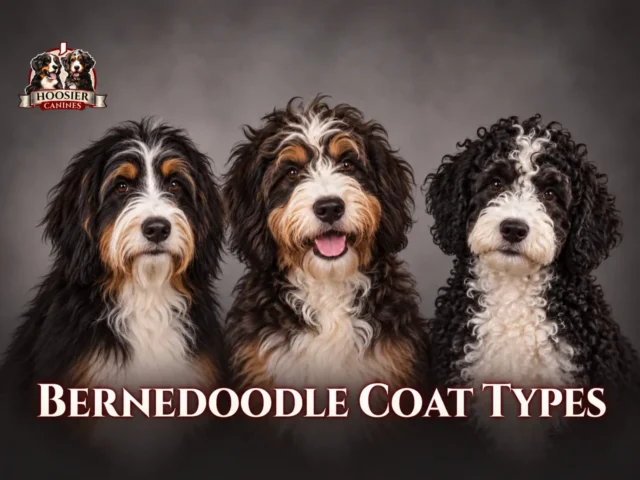
Bernedoodle coats can be straight, wavy, or curly and may be furnished or unfurnished. These are separate traits, and no single generation label guarantees one exact coat or shedding result.
Read ArticleBernedoodle Guide
Learn how texture, furnishings, shedding, genetics, brushing, and grooming work together.
Read ArticleBernedoodle Guide
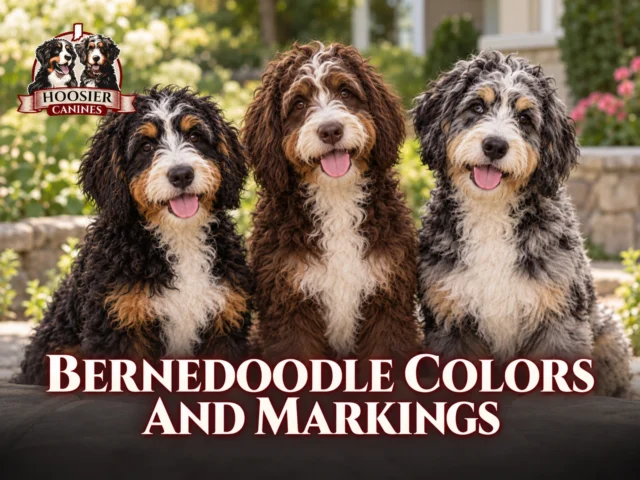
Understand visible pigment and pattern terms without using color to predict temperament or health.
Read ArticleBernedoodle Guide
Bernedoodle color terms describe visible pigment and pattern. Because Bernedoodles inherit from two parent breeds and are not a standardized breed, shade, placement, symmetry, and adult appearance can vary considerably.
Read ArticleBernedoodle Guide
Bernedoodles need a balance of physical activity, mental work, social connection, rest, and recovery. The right amount changes with age, health, size, temperament, weather, and the individual dog.
Read ArticleBernedoodle Guide
Understand how Bernedoodles fit with children, other pets, activity levels, home routines, travel, and different family lifestyles.
Read ArticleBernedoodle Guide
The practical daily and long-term routines that support a healthy; comfortable; well-adjusted Bernedoodle.
Read ArticleBernedoodle Guide
Generation labels such as F1, F1B, F2, and Multi-Gen are informal shorthand for parentage. They can help explain a pairing, but they are not regulated breed standards and do not…
Read ArticleBernedoodle Guide
Separate size labels, breeding types, and generation shorthand by looking at the exact parent dogs.
Read ArticleBernedoodle Guide
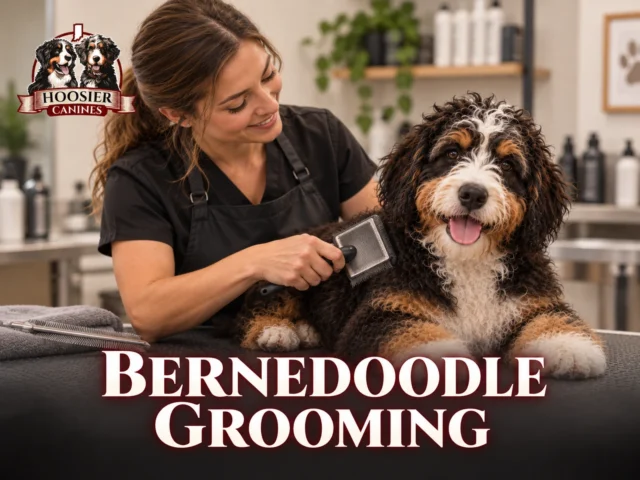
The brushing; bathing; professional grooming; nail; ear; and dental care needed to keep a Bernedoodle comfortable.
Read ArticleBernedoodle Guide
Bernedoodle grooming is ongoing coat and body care, not an occasional haircut. Brushing, combing, bathing, drying, nail care, ear care, dental care, and professional grooming all contribute to comfort and…
Read ArticleBernedoodle Guide
A realistic grooming schedule for brushing, baths, nails, ears, coat trims, and professional grooming appointments.
Read ArticleBernedoodle Guide
A connected guide to health testing, preventive veterinary care, nutrition, lifespan, grooming, and daily routines throughout a Bernedoodle’s life.
Read ArticleBernedoodle Guide
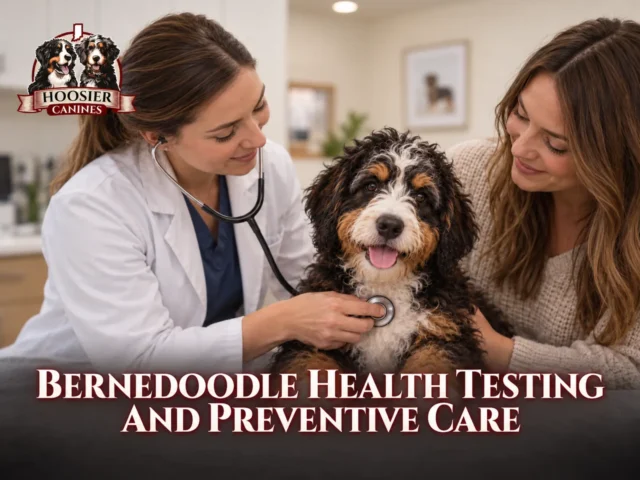
Understand why breeder health testing matters, what OFA evaluations are designed to assess, and why puppy buyers should look beyond a basic veterinary exam.
Read ArticleBernedoodle Guide
Responsible Bernedoodle breeding combines parent health screening with veterinary care for the puppy. Testing can reduce known risks and support better decisions, but it cannot guarantee that a dog will…
Read ArticleBernedoodle Guide
A Bernedoodle’s lifespan cannot be predicted from a size, color, or generation label alone. Genetics, body size, inherited risk, preventive care, nutrition, body condition, exercise, environment, and chance all contribute.
Read ArticleBernedoodle Guide
Healthy puppy growth depends on a complete and balanced diet, appropriate portions, steady body condition, veterinary oversight, and adjustments as the puppy matures. More food does not create a healthier…
Read ArticleBernedoodle Guide
A Bernedoodle size guide should explain realistic estimates without turning them into promises. Hoosier Canines uses Mini and Standard as size categories, while each litter receives guidance based on its…
Read ArticleBernedoodle Guide
Compare Hoosier Canines Mini and Standard categories and learn how litter-specific adult size is estimated.
Read ArticleBernedoodle Guide
Puppy socialization is the careful process of helping a dog feel safe and capable around the people, animals, places, sounds, surfaces, and handling it may encounter. It is not forced…
Read ArticleBernedoodle Guide
Bernedoodles can be excellent family companions, but success with children and other animals depends on the individual dog, careful matching, supervision, training, and respectful household routines.
Read ArticleBernedoodle Guide
Plan careful introductions, supervision, resource management, and training when bringing a Bernedoodle into a home with other dogs or pets.
Read ArticleBernedoodle Guide
Bernedoodles are often described as affectionate, intelligent, social, and people-oriented, but no mix has one guaranteed temperament. Behavior reflects inherited tendencies, early development, health, learning history, environment, and the.
Read ArticleBernedoodle Guide
Explore Bernedoodle personality, trainability, communication, socialization, confidence, and the behaviors owners shape from puppyhood forward.
Read ArticleBernedoodle Guide
Many Bernedoodles are bright and responsive to people, but trainability is not automatic obedience. Puppies need clear routines, consistent reinforcement, age-appropriate expectations, adequate rest, and practice in the places where…
Read ArticleBernedoodle Guide
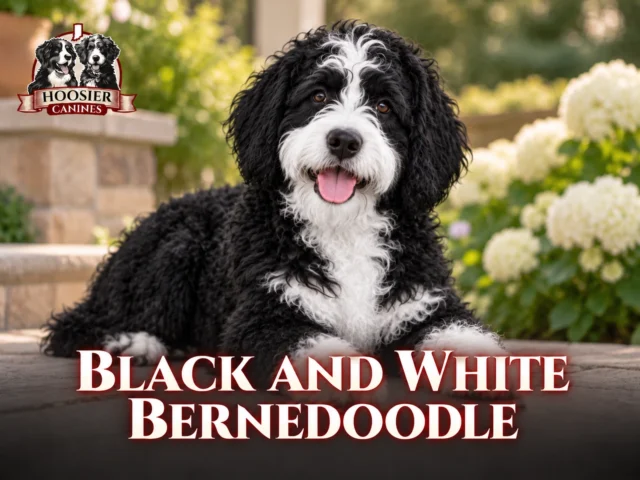
Black and white describes the visible color combination, not one required marking layout. Some puppies have a narrow blaze and chest marking, while others have broader white areas or a…
Read ArticleBernedoodle Guide
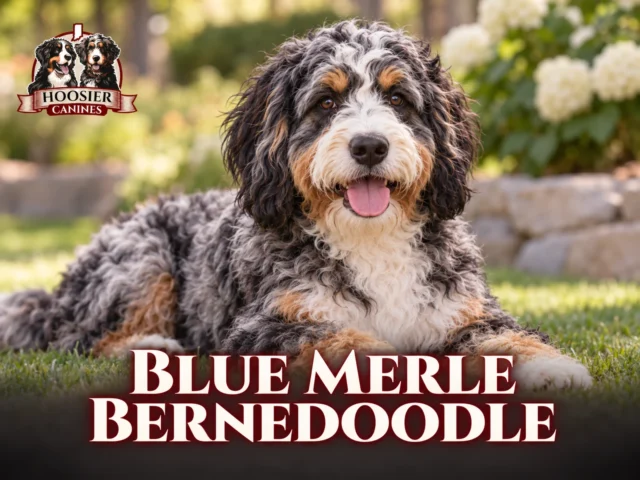
A black-based merle pattern that appears gray; silver; black; and sometimes white or rust.
Read ArticleBernedoodle Guide
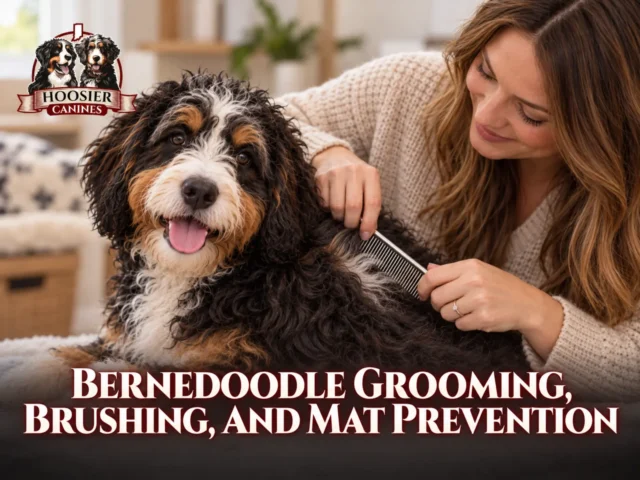
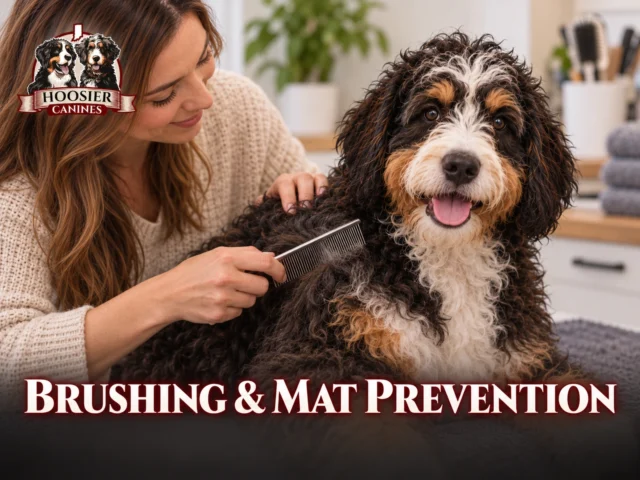
Learn how Bernedoodle mats form, where they hide, and how consistent brushing and combing help keep the coat comfortable.
Read ArticleBernedoodle Guide
Chocolate describes brown pigment instead of black pigment. The shade can range from deep brown to lighter tones, and the dog may also carry white, tan-point, merle, sable, or other…
Read ArticleBernedoodle Guide
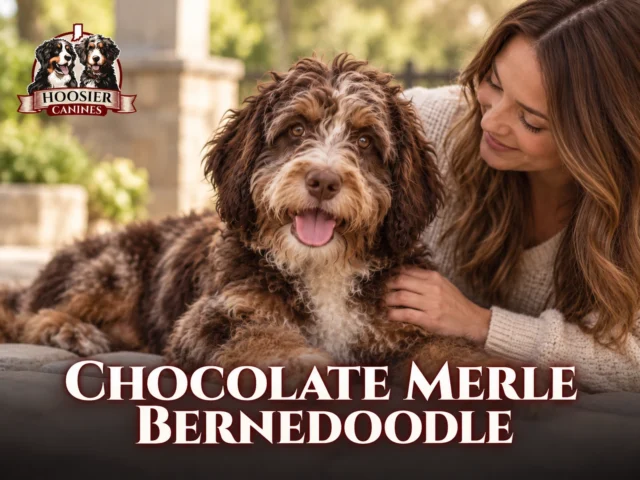
Chocolate merle describes a merle pattern expressed on a brown-pigment background. The coat can show lighter and darker brown areas and may also include white or tan-point markings.
Read ArticleBernedoodle Guide
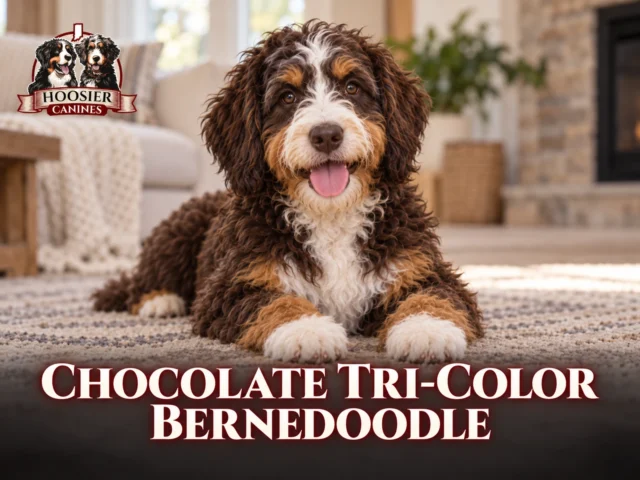
Chocolate tri-color generally combines a brown base with white markings and tan or copper points. The proportion, contrast, and placement of all three colors vary from puppy to puppy.
Read ArticleBernedoodle Guide
Choosing a Bernedoodle puppy should begin with the breeder, parent dogs, health information, and household fit. Color and a single label may attract attention, but they are not enough to…
Read ArticleBernedoodle Guide
Choosing between Mini and Standard should be a practical family decision. The right size is the one the household can comfortably train, transport, groom, exercise, and care for throughout the…
Read ArticleBernedoodle Guide
Hoosier Canines’ labels answer different questions. Mini and Standard describe expected adult size, while Ultra and Multi-Gen describe how a litter is bred. A puppy can therefore be described by…
Read ArticleBernedoodle Guide
Use predictable routines, supervision, appropriate confinement, and reinforcement to teach a Bernedoodle puppy where to rest and where to eliminate.
Read ArticleBernedoodle Guide
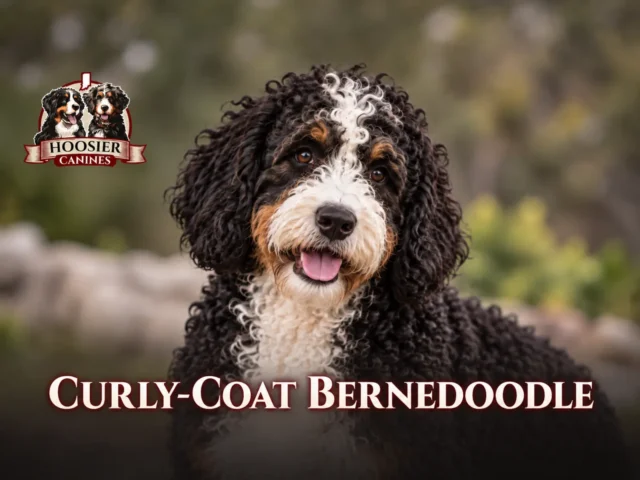
A curly-coat Bernedoodle shows stronger curl through the body coat. Curlier coats may release less visible hair, but they are not guaranteed to be non-shedding or safe for every person…
Read ArticleBernedoodle Guide
Bernedoodles can shed very little, moderately, or more noticeably. Shedding is influenced by several coat traits and family history, so no generation or marketing label can guarantee a completely non-shedding…
Read ArticleBernedoodle Guide
Help a Bernedoodle puppy develop confidence through controlled, positive exposure to people, surfaces, sounds, handling, environments, and appropriate dogs.
Read ArticleBernedoodle Guide
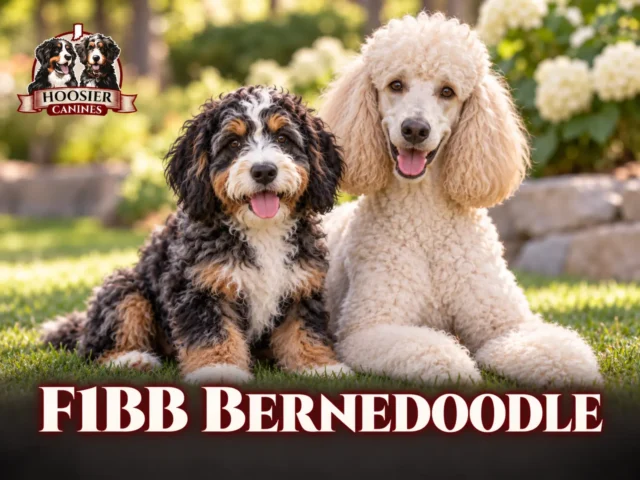
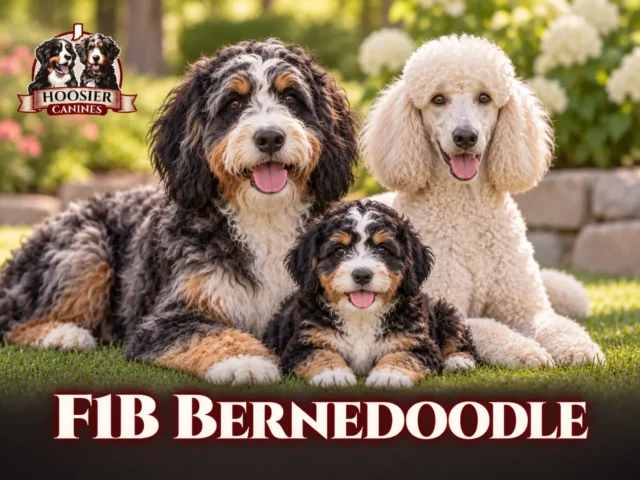
F1 commonly describes the first cross between a Bernese Mountain Dog and a Poodle. F1B commonly describes an F1 Bernedoodle bred back to a parent breed, but the breeder should…
Read ArticleBernedoodle Guide
A further backcross commonly produced by breeding an F1B Bernedoodle to a Poodle.
Read ArticleBernedoodle Guide
An F1 Bernedoodle bred back to a Poodle; often selected for more predictable furnishings and lower-shedding potential.
Read ArticleBernedoodle Guide
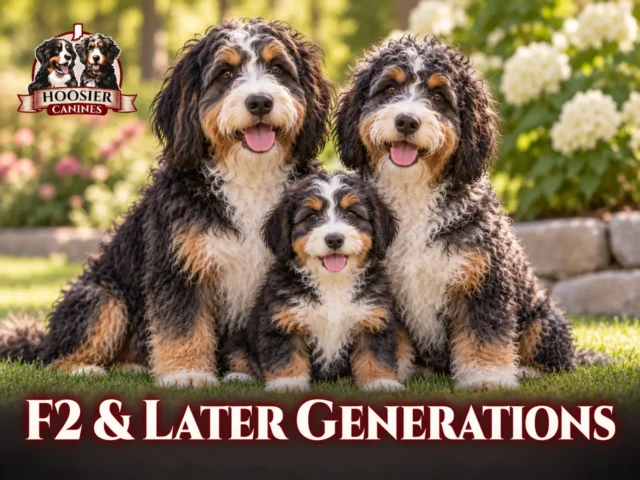
F2 generally refers to a second-generation pairing involving two F1 Bernedoodles. Later-generation labels can be used differently across programs, so the exact parentage should always be written out.
Read ArticleBernedoodle Guide
A second-generation backcross with outcomes that depend on the exact dogs used in the pairing.
Read ArticleBernedoodle Guide
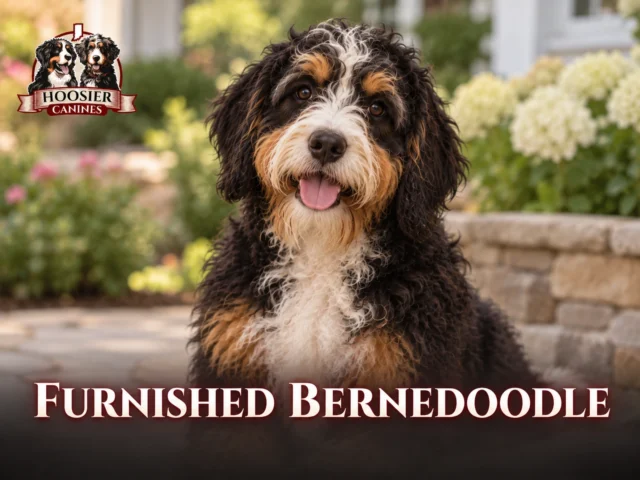
A Bernedoodle with the beard; eyebrows; and fuller facial coat commonly associated with the doodle appearance.
Read ArticleBernedoodle Guide
Furnishings are the longer facial hairs that create a beard, eyebrows, and the classic shaggy doodle face. An unfurnished Bernedoodle has a smoother face with less pronounced facial hair. Furnishings…
Read ArticleBernedoodle Guide
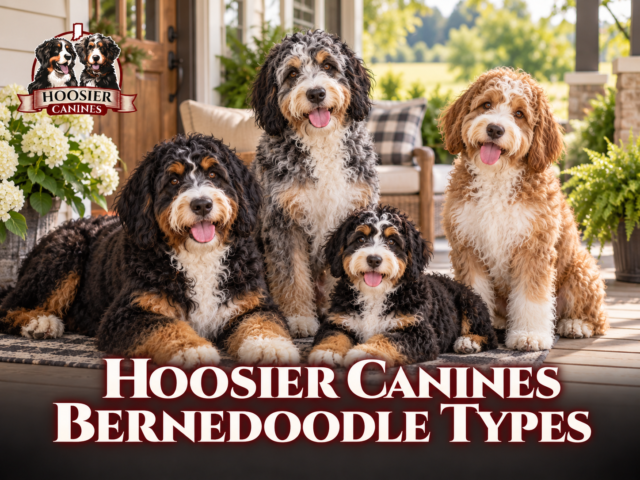
Hoosier Canines uses four core labels in its Bernedoodle program: Mini, Standard, Ultra, and Multi-Gen. Mini and Standard describe expected size. Ultra and Multi-Gen describe breeding type or lineage. They…
Read ArticleBernedoodle Guide
House training, crate comfort, and leash skills improve through management, repetition, and realistic puppy expectations. Progress is rarely perfectly linear, especially during growth, schedule changes, illness, or adolescence.
Read ArticleBernedoodle Guide
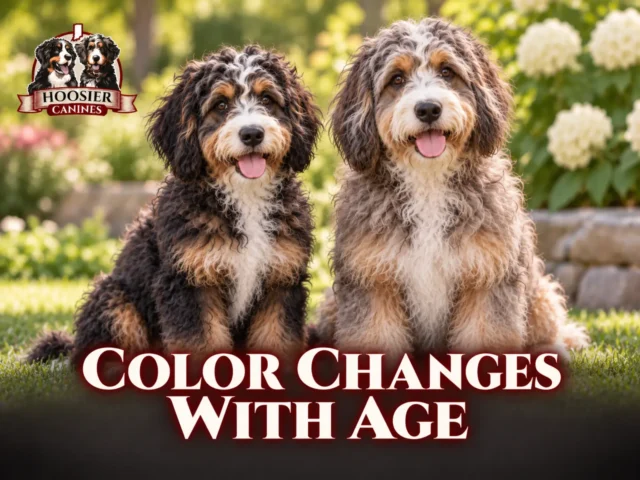
A Bernedoodle puppy’s coat can change in shade, contrast, and texture as the adult coat develops. The amount of change depends on the color genes inherited from both parents and…
Read ArticleBernedoodle Guide
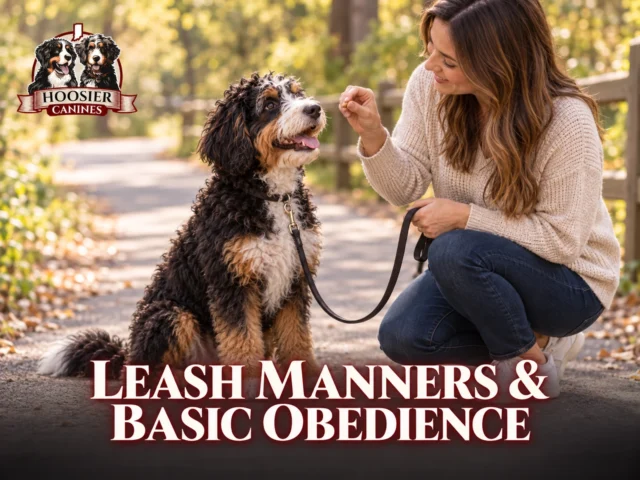
Teach a Bernedoodle to stay connected to the handler, move calmly on leash, respond to foundational cues, and practice around gradually increasing distractions.
Read ArticleBernedoodle Guide
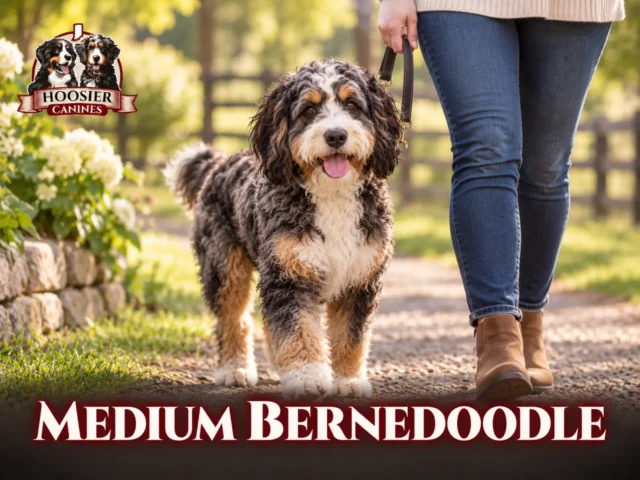
A balanced Bernedoodle size for families who want more substance than a Mini without the footprint of a large Standard.
Read ArticleBernedoodle Guide
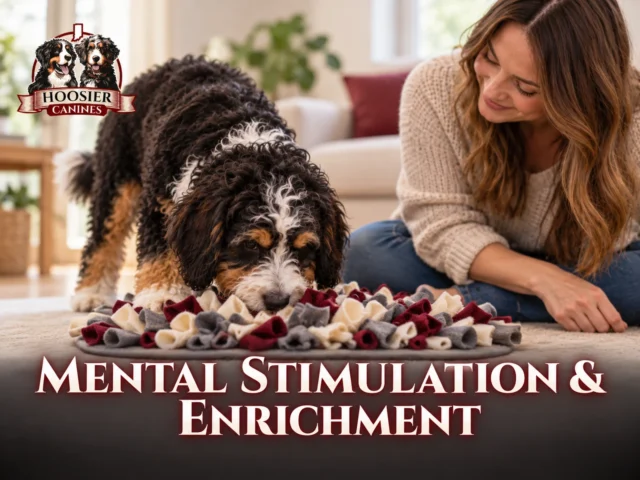
Give an intelligent Bernedoodle productive ways to think, sniff, solve problems, train, and settle without relying on nonstop physical exercise.
Read ArticleBernedoodle Guide
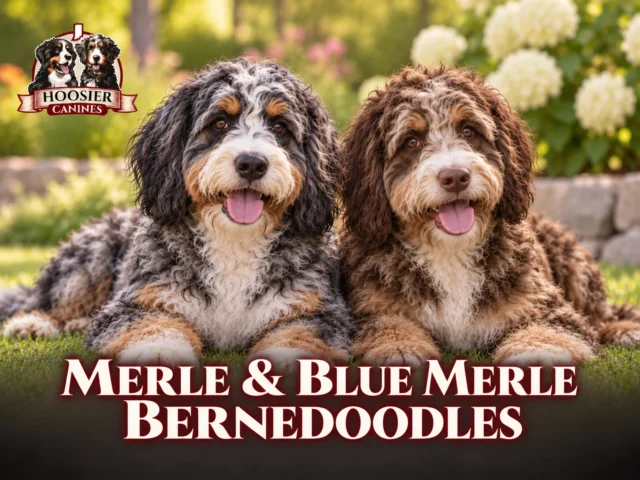
Merle is a mottled pigment pattern. Blue merle commonly refers to merle expressed on a black-based coat, producing areas that can appear black, gray, and lighter. Expression may be obvious,…
Read ArticleBernedoodle Guide
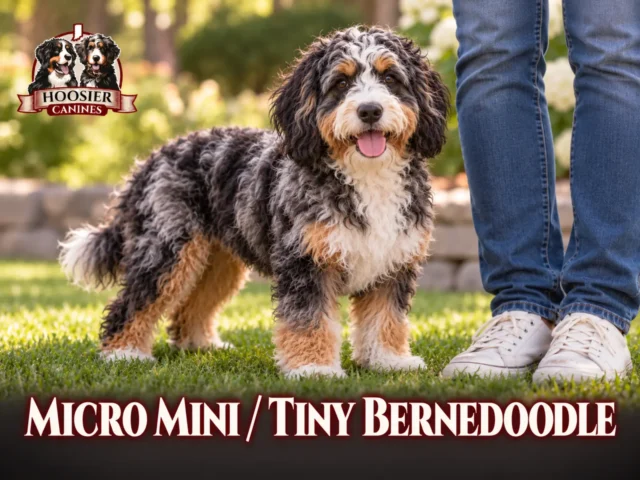
A compact Bernedoodle size for families who want the breed's companionship in a smaller adult dog.
Read ArticleBernedoodle Guide
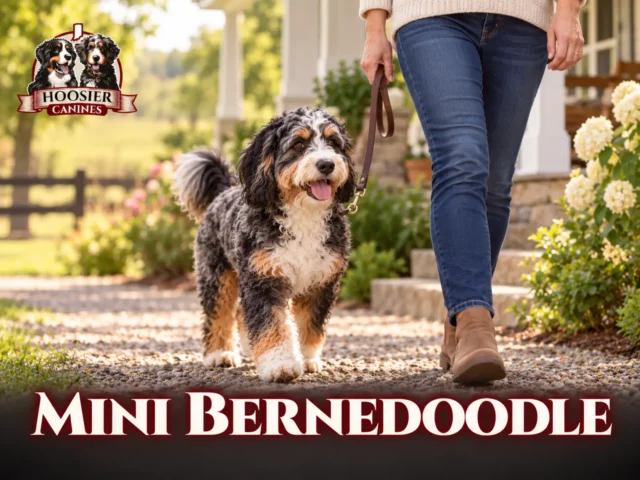
At Hoosier Canines, Mini Bernedoodle is a size category used to describe litters expected to mature smaller than the Standard category. It does not describe one fixed genetic recipe, coat,…
Read ArticleBernedoodle Guide
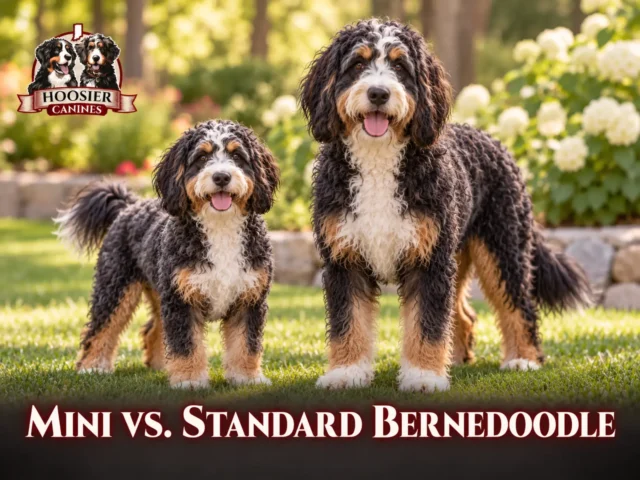
Mini and Standard are Hoosier Canines’ two Bernedoodle size categories. The better choice depends on the family’s daily life and the individual puppy, not on the assumption that size alone…
Read ArticleBernedoodle Guide
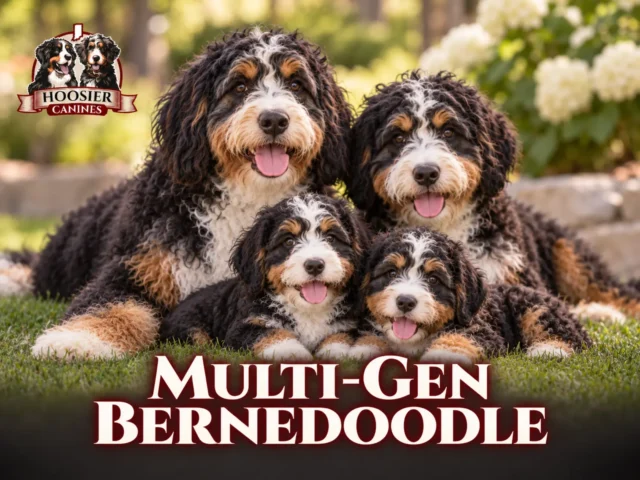
A Multi-Gen Bernedoodle comes from an established Bernedoodle lineage rather than the first direct Bernese Mountain Dog-to-Poodle cross. The term describes lineage, not one universal genetic percentage or guaranteed outcome.
Read ArticleBernedoodle Guide
Parti, tuxedo, and abstract are terms used to describe the amount and placement of white in the coat. They are visual descriptions, and breeders may apply the boundaries between the…
Read ArticleBernedoodle Guide
Phantom describes distinct point markings on a darker base without requiring the white areas associated with a traditional tri-color pattern. The points may be visible on the face, chest, legs,…
Read ArticleBernedoodle Guide
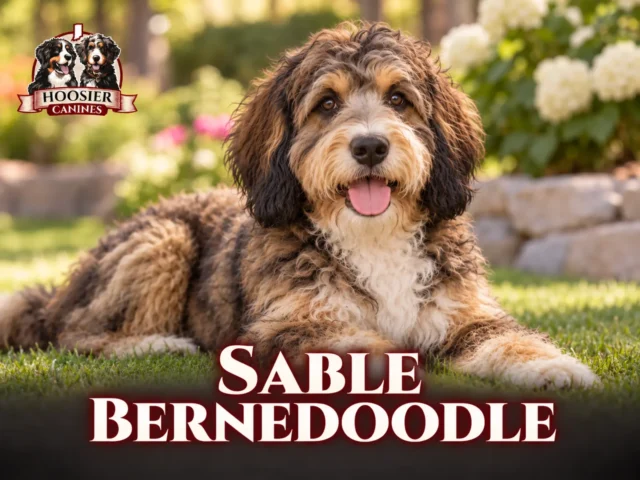
Sable describes hairs with more than one band or shade of pigment, often creating a coat that can look darker in puppyhood and lighter or more blended as the dog…
Read ArticleBernedoodle Guide
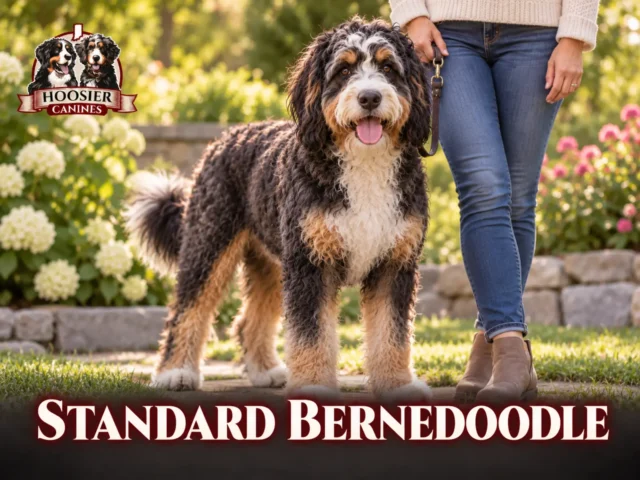
At Hoosier Canines, Standard Bernedoodle is the larger size category. The label helps families understand the expected scale of a litter, but it is still an estimate based on the…
Read ArticleBernedoodle Guide
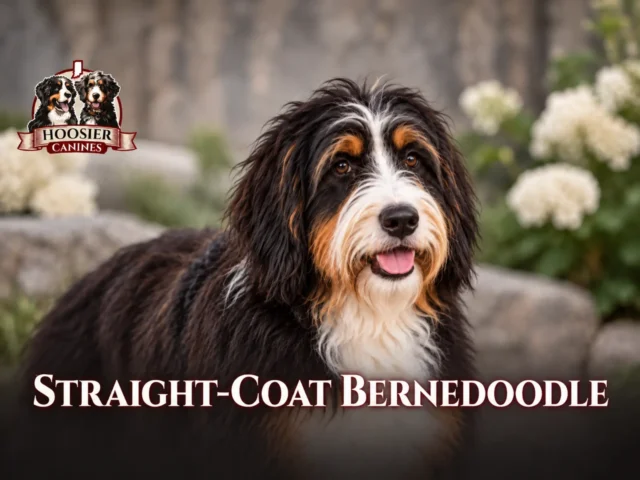
A straight-coat Bernedoodle has less curl through the body coat. Straight does not automatically mean unfurnished, and a furnished straight-coated dog can still have the beard and eyebrows associated with…
Read ArticleBernedoodle Guide
The first days home should be calm, predictable, and focused on safety. A new puppy is adjusting to unfamiliar people, sounds, surfaces, routines, and separation from its previous environment.
Read ArticleBernedoodle Guide
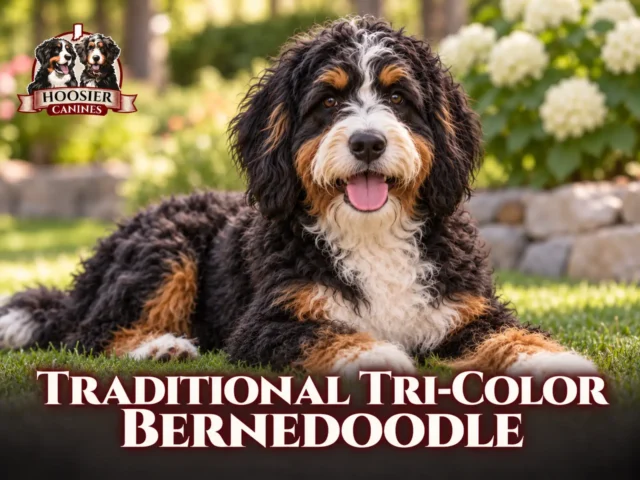
Traditional tri-color generally describes a black-based Bernedoodle with white markings and tan or rust points. The familiar look echoes the Bernese Mountain Dog, but the amount and placement of each…
Read ArticleBernedoodle Guide
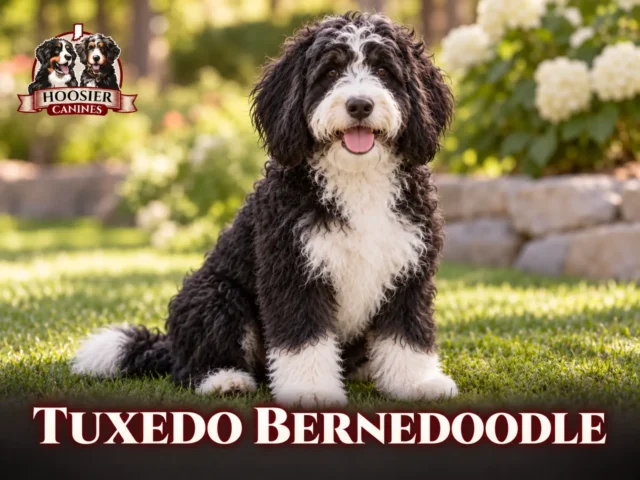
A distinctive white marking pattern that can resemble a formal shirt front against a darker coat.
Read ArticleBernedoodle Guide
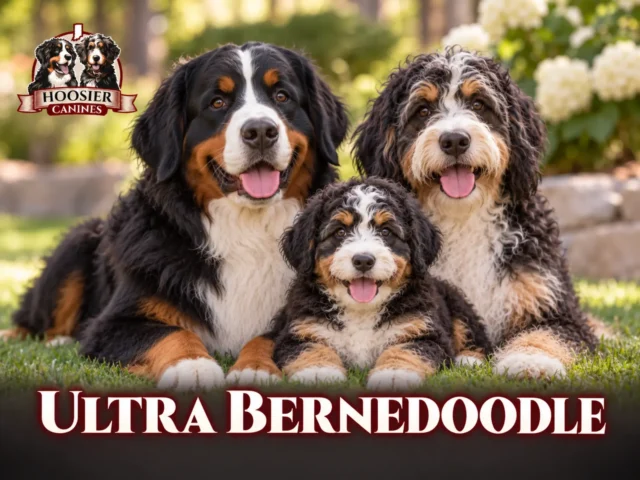
Ultra Bernedoodle is a Hoosier Canines breeding-type term, not a size category. Hoosier Canines describes an Ultra as typically resulting from a Bernese Mountain Dog bred with a Bernedoodle, creating…
Read ArticleBernedoodle Guide
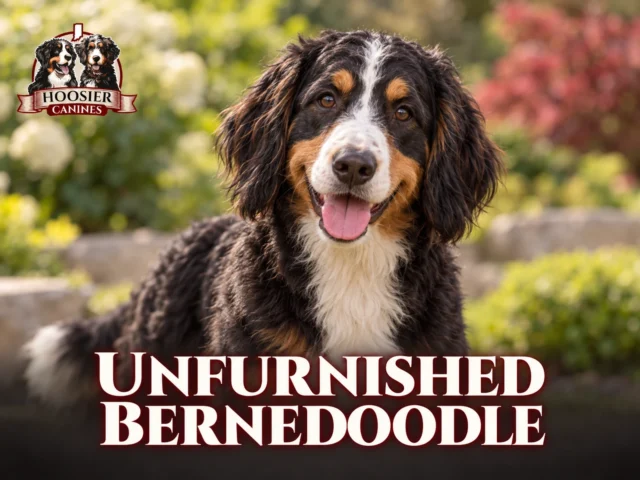
A Bernedoodle without the longer beard and eyebrow furnishings; often showing a smoother Bernese-like face.
Read ArticleBernedoodle Guide
Understand the first-year vaccine series, parasite prevention, wellness exams, and how preventive veterinary care supports a healthy Bernedoodle puppy.
Read ArticleBernedoodle Guide
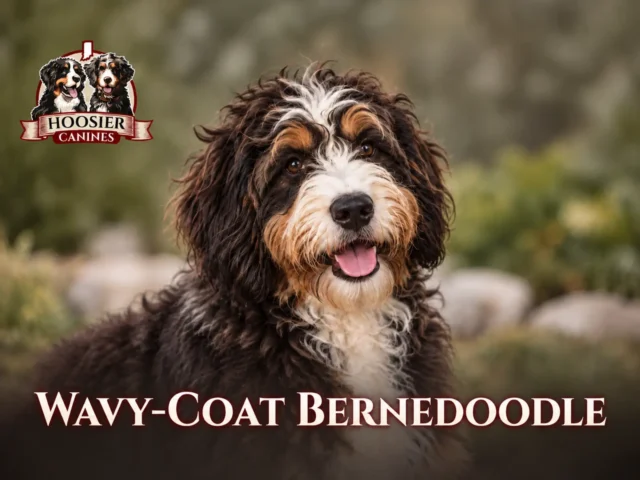
A wavy coat falls between straight and curly and is common in Bernedoodles. The wave can be loose or more pronounced, and the adult coat may differ from the soft…
Read ArticleBernedoodle Guide
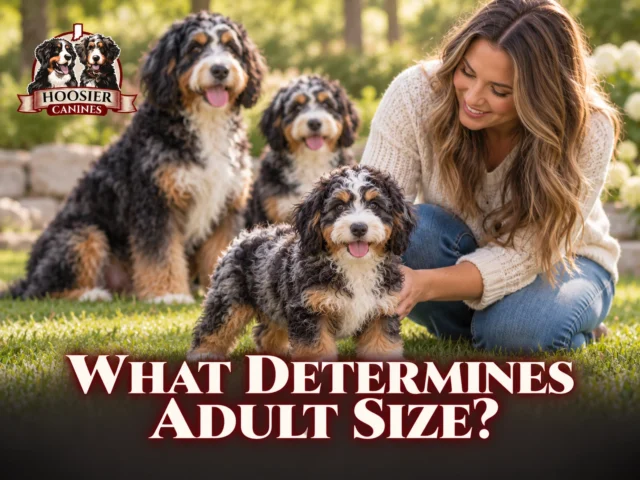
Adult Bernedoodle size reflects multiple inherited and developmental factors. The actual parent dogs and broader family line usually provide better evidence than a generation label or a generic online calculator.
Read ArticleInteractive Builder
Explore size, generation, coat color and markings with Hoosier’s interactive Bernedoodle Builder.