
Bernedoodle Guide
Bernedoodle Colors & Markings
Understand visible pigment and pattern terms without using color to predict temperament or health.
Bernedoodle Colors and Markings
Bernedoodle color terms describe visible pigment and pattern. Because Bernedoodles inherit from two parent breeds and are not a standardized breed, shade, placement, symmetry, and adult appearance can vary considerably.
Read the guideTraditional Tri-Color Bernedoodle
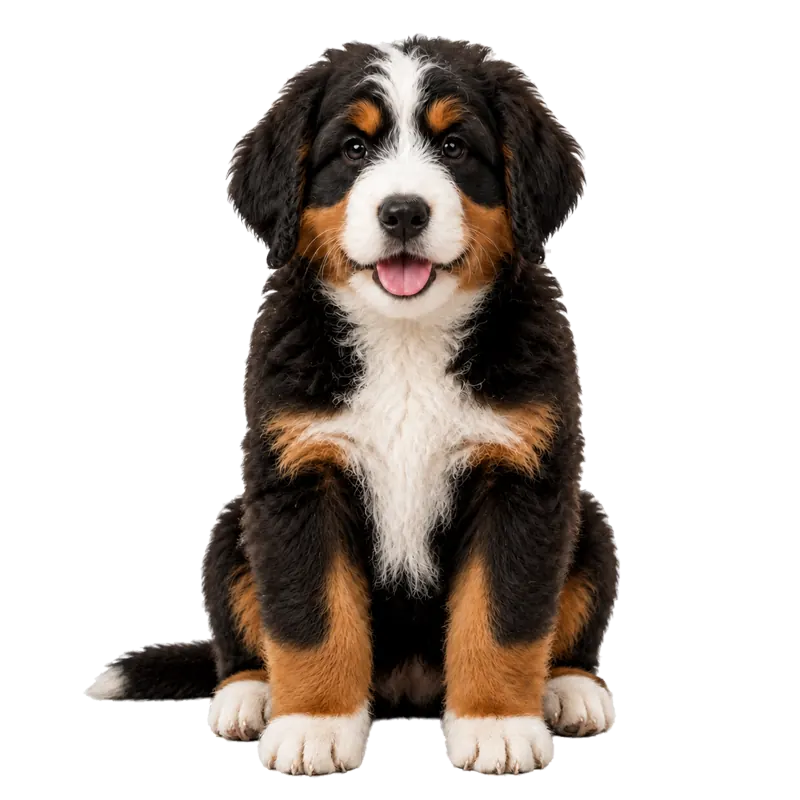
Traditional tri-color generally describes a black-based Bernedoodle with white markings and tan or rust points. The familiar look echoes the Bernese Mountain Dog, but the amount and placement of each color can vary.
Read the guideBlack and White Bernedoodle
Black and white describes the visible color combination, not one required marking layout. Some puppies have a narrow blaze and chest marking, while others have broader white areas or a more distinct two-color pattern.
Read the guidePhantom Bernedoodle
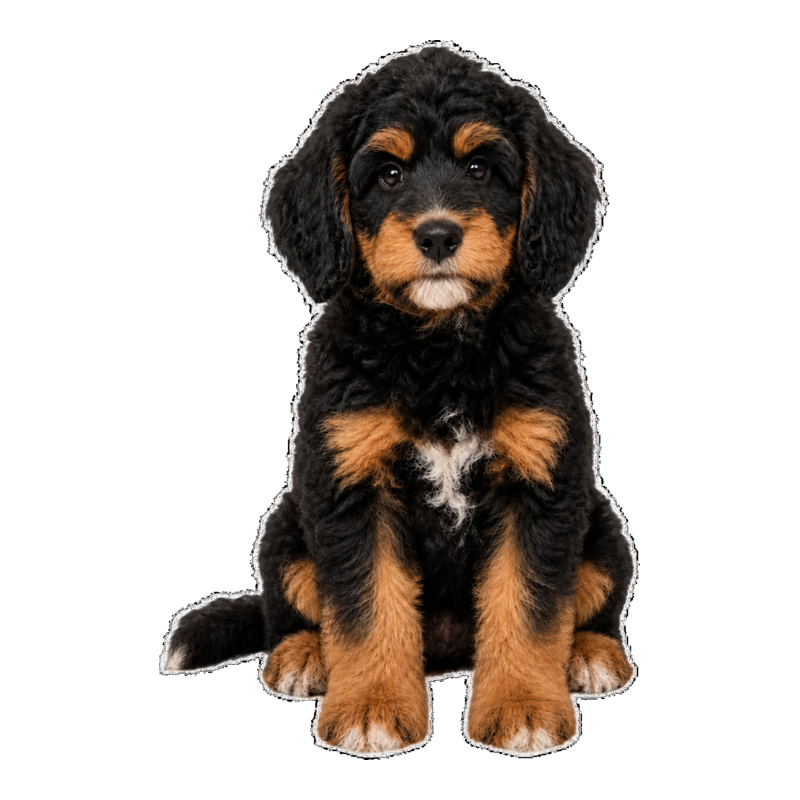
Phantom describes distinct point markings on a darker base without requiring the white areas associated with a traditional tri-color pattern. The points may be visible on the face, chest, legs, and under the tail.
Read the guideMerle and Blue Merle Bernedoodles
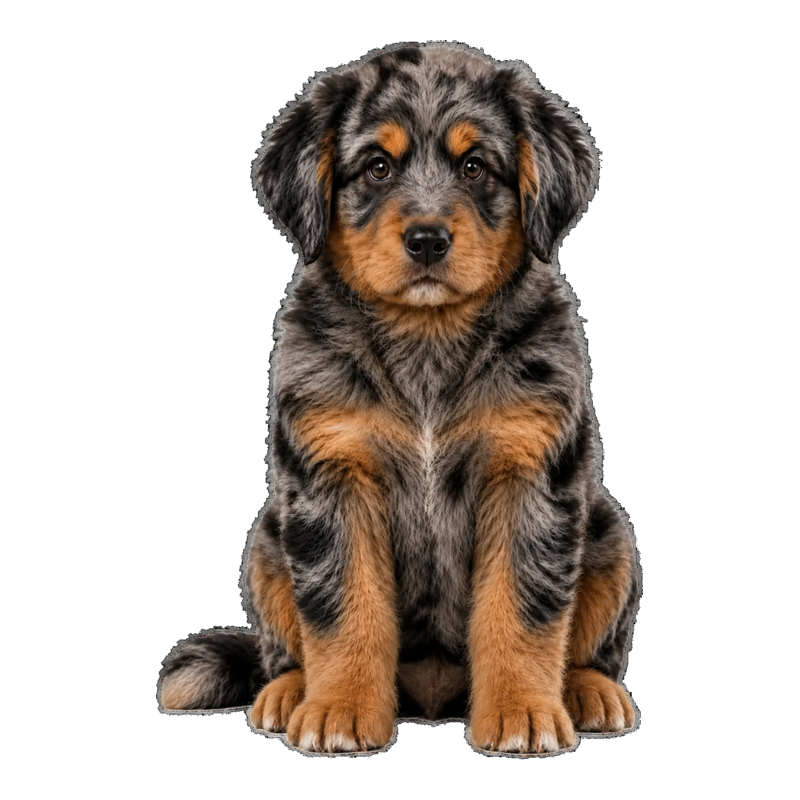
Merle is a mottled pigment pattern. Blue merle commonly refers to merle expressed on a black-based coat, producing areas that can appear black, gray, and lighter. Expression may be obvious, subtle, or difficult to identify visually.
Read the guideChocolate Bernedoodle
Chocolate describes brown pigment instead of black pigment. The shade can range from deep brown to lighter tones, and the dog may also carry white, tan-point, merle, sable, or other visible patterning.
Read the guideChocolate Tri-Color Bernedoodle
Chocolate tri-color generally combines a brown base with white markings and tan or copper points. The proportion, contrast, and placement of all three colors vary from puppy to puppy.
Read the guideChocolate Merle Bernedoodle
Chocolate merle describes a merle pattern expressed on a brown-pigment background. The coat can show lighter and darker brown areas and may also include white or tan-point markings.
Read the guideSable Bernedoodle
Sable describes hairs with more than one band or shade of pigment, often creating a coat that can look darker in puppyhood and lighter or more blended as the dog matures.
Read the guideParti, Tuxedo, and Abstract Bernedoodle Markings
Parti, tuxedo, and abstract are terms used to describe the amount and placement of white in the coat. They are visual descriptions, and breeders may apply the boundaries between the terms somewhat differently.
Read the guideHow Bernedoodle Color Can Change with Age
A Bernedoodle puppy’s coat can change in shade, contrast, and texture as the adult coat develops. The amount of change depends on the color genes inherited from both parents and the individual dog.
Read the guideFrom The Hoosier Bernedoodle Journal
Related Articles & Resources
Go deeper with three carefully selected articles or trusted resources connected to this topic.