

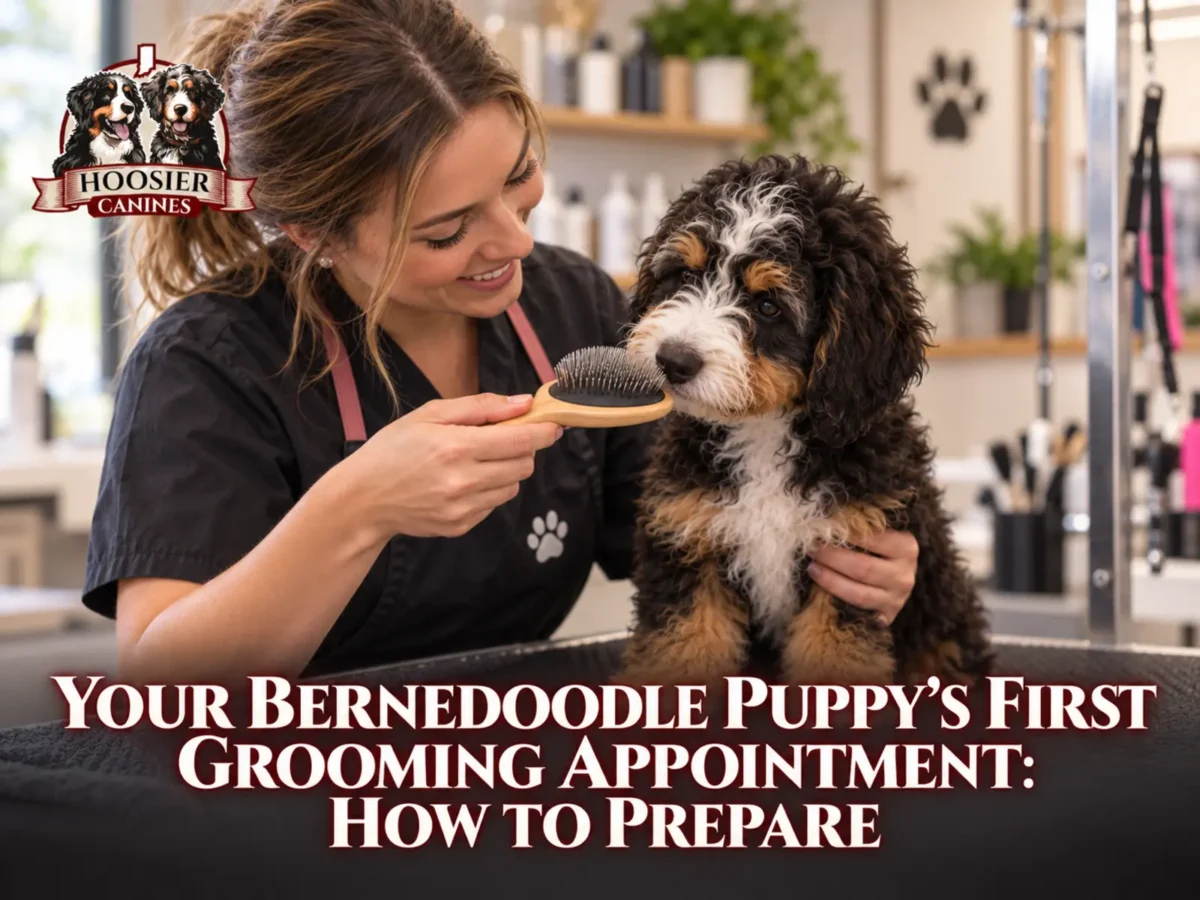
A first grooming visit is easier when the puppy has practiced being handled before the appointment. Bernedoodle coats vary, and grooming needs depend on texture, length, furnishings, and the owner’s maintenance routine. Ask the breeder, veterinarian, and groomer what is appropriate for your puppy’s age, vaccine status, and coat.
Practice at Home in Short Sessions
Begin with a soft brush and let the puppy sniff it. Touch the shoulder, brush once, reward, and stop. Gradually practice paws, ears, collar handling, and standing on a stable nonslip surface. Pair each step with food or praise. Do not hold the puppy down or continue through panic. Brief positive practice is more useful than a long grooming session at home.
Teach the puppy to tolerate the sound of clippers or a dryer only at a comfortable distance and low intensity. Never point hot air directly at the skin. If the puppy becomes worried, make the sound quieter or return to an easier step.
Choose a Groomer and Ask Questions
Look for a groomer experienced with puppies and doodle coats. Explain that this is the puppy’s first visit and ask what the appointment will include. Some first appointments focus on a bath, brush, nails, and a calm introduction rather than a full haircut. Ask how long the puppy will be there, whether breaks are offered, what vaccines are required, and what the groomer will do if the puppy becomes stressed.
Prepare for the Appointment
Confirm the clinic or groomer’s vaccination requirements before booking. Bring records if requested. Give the puppy a toilet break before the visit and arrive with enough time to check in calmly. Tell the groomer about matting, sensitive areas, previous handling concerns, or anything your puppy finds frightening.
Keep Up With Coat Care
Ask the groomer to show you how to brush through the coat down to the skin without scraping. Schedule future appointments based on the coat and maintenance plan they recommend. Waiting until the coat is severely tangled can make grooming uncomfortable and may require a shorter trim.
Tell the Groomer What Your Puppy Knows
Describe what your puppy has practiced at home and what is new. Tell the groomer whether the puppy has heard a dryer, stood on a table, had nails touched, or been brushed throughout the coat. Mention any area the puppy protects or avoids. This helps the groomer choose an appropriate first appointment and avoid pushing through a difficult step.
Ask for feedback after the visit. Which handling was comfortable? Where did the puppy need a break? Use those details to choose the next home-practice step. If the coat is matted, ask how it can be made comfortable and what maintenance interval is realistic. Do not try to cut tight mats with scissors near the skin.
Agree on the Goal of the First Visit
Tell the groomer whether you want a gentle introduction, a specific maintenance service or help with an existing coat problem. Ask which tasks can reasonably be completed while the puppy stays comfortable. An introductory visit is successful when it gives the puppy a manageable experience and gives you useful feedback, even if every service is not completed that day.
Discuss your preferred coat length and how much home brushing you can realistically do. A long fluffy style needs a maintenance plan, not just a photograph. The Guide’s coat expectations article and shedding resource help frame that discussion. Coat texture does not eliminate the need to check for tangles.
Practice the Tasks Your Puppy Finds Difficult
Choose one step at a time. Show the brush, touch briefly, reward and finish. Later, practice standing on a nonslip mat, lifting a paw for a moment or seeing a towel approach. A household routine can include these small sessions without requiring the puppy to tolerate a full grooming appointment at home.
If the puppy stiffens, pulls away or uses teeth, pause and make the next step easier. Our biting article explains why handling-related behavior needs attention, while the training routine gives you a place for brief practice. The Journal’s body language article helps you notice discomfort before it escalates.
Check the Coat Between Appointments
Ask the groomer to demonstrate how to part the coat and use a brush and comb appropriate to its texture. Pay attention to areas where hair rubs, such as behind the ears, under the legs and beneath a harness. If the comb stops at a knot, avoid pulling harder or cutting close to skin with scissors.
Discuss a comfortable professional solution for tight mats. Ask whether a shorter trim would make home maintenance more realistic. The Journal’s grooming guide covers the broader routine, and our ear care article helps coordinate grooming with veterinary advice about ears.
Leave With a Clear Next Step
Ask what was easy, what was difficult and what to practice before the next visit. Record the recommended maintenance interval and supplies. If the groomer noticed skin irritation, ear odor or pain, ask what was observed and arrange veterinary advice rather than asking the groomer to diagnose the cause.
Confirm vaccination requirements with both the groomer and clinic before future visits. Our first vet visit checklist helps you gather records, and the socialization article covers calm introductions to sounds and places. Include appointment frequency in your ownership budget so the coat stays manageable between visits.
References & Further Reading
- AKC: Grooming at home
Coat checks, appropriate tools and maintenance between professional visits. - AKC: Standard Poodle coat care
Brushing technique and maintenance considerations for Poodle-type coats. - AVSAB: Positive veterinary care
Handling and reducing stress during veterinary visits.