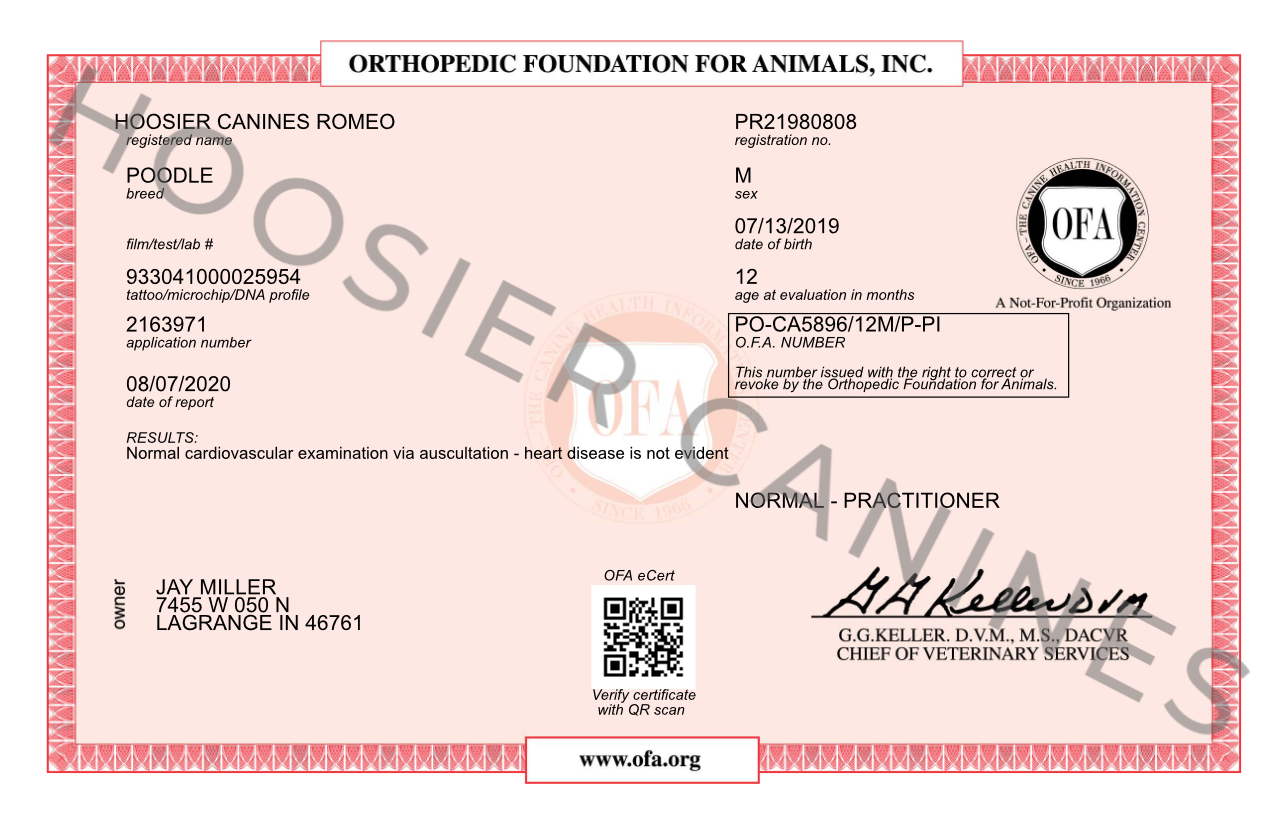
What Is OFA Testing For Dogs?
What Puppy Buyers Should Know

OFA Hip, Elbow, Patella, Heart, Genetic

When families begin looking for a puppy, they often see phrases like OFA tested, health tested parents, genetic testing, or Paw Print Genetics. Those words sound important, but unless someone explains them clearly, they can feel more like breeder language than useful information.

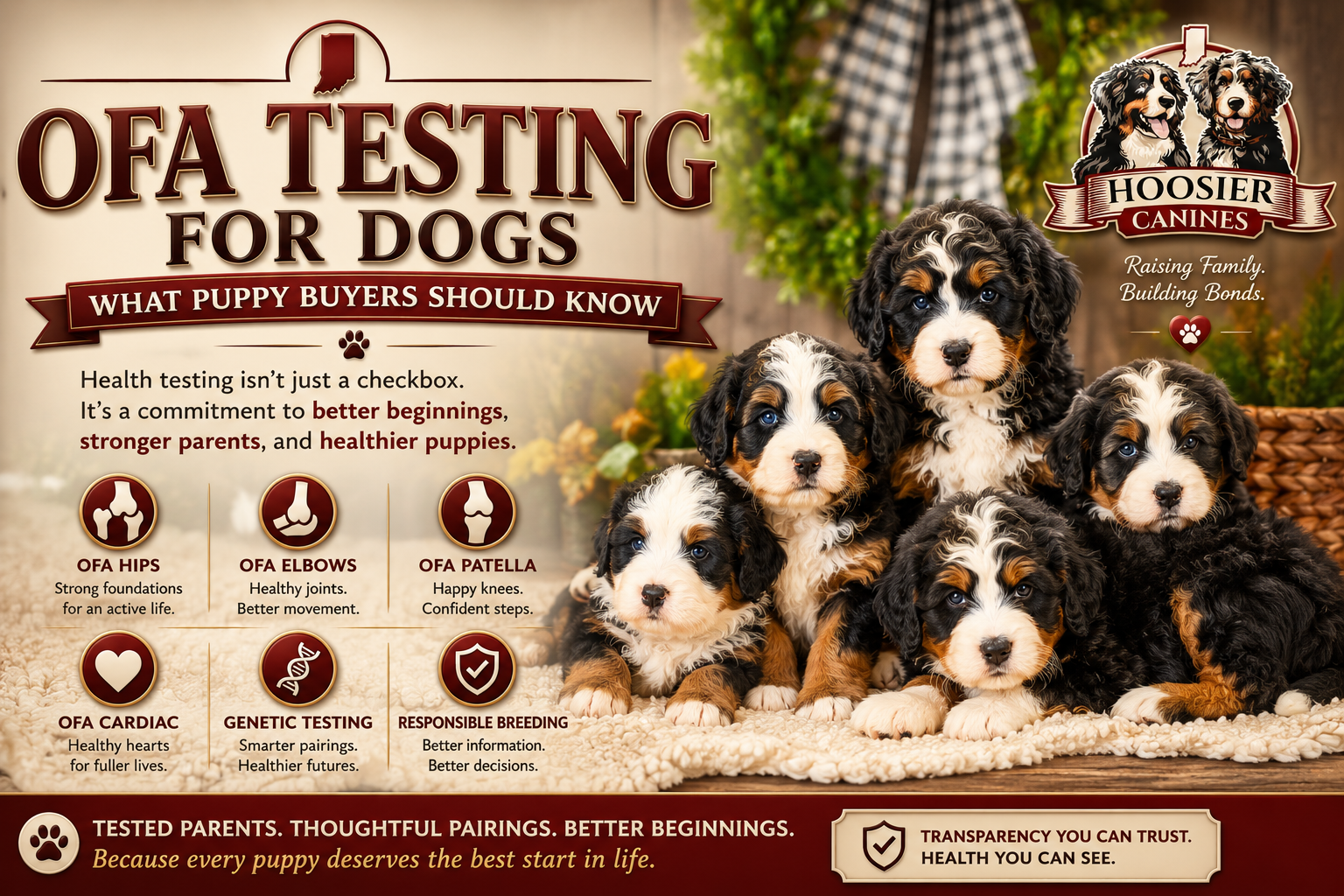
OFA testing is one of the ways responsible breeders evaluate parent dogs before breeding. It helps identify certain orthopedic, cardiac, and inherited health concerns that may affect future puppies. At Hoosier Canines, health testing is part of how we make thoughtful breeding decisions, not something we treat like a badge to slap on a page.

No breeder can promise that a puppy will never have a health issue. Dogs are living animals, and long-term health is influenced by genetics, nutrition, growth, exercise, environment, and regular veterinary care. What health testing does provide is better information before a litter is planned, which helps reduce avoidable risks and gives families a clearer picture of the dogs behind their puppy.

What Is OFA Testing?

Im guessing you are asking, “what is OFA testing?” OFA testing refers to canine health screenings such as hip/elbow X-rays, eye exams, and genetic testing evaluated by specialists. 

OFA stands for the Orthopedic Foundation for Animals, a well-known canine health registry used by breeders, veterinarians, and dog owners. OFA evaluations help screen dogs for certain inherited health conditions, including issues involving the hips, elbows, knees, heart, eyes, and other areas depending on the breed and the testing performed.

For puppy buyers, OFA testing matters because it shows that the breeder is looking beyond color, size, and coat. A beautiful puppy still needs healthy parent dogs behind it. When breeders take time to evaluate structure, joints, heart health, and genetic risk, they are making breeding decisions with more care and more accountability.

At Hoosier Canines, we use health testing as part of the full picture. We look at temperament, structure, genetics, coat traits, size, and overall quality before deciding whether a dog belongs in our program. That matters for Bernedoodles, Mini Bernedoodles, Ultra Bernedoodles, and every carefully planned litter we raise.
Why Health Testing Matters Before Puppies Are Born

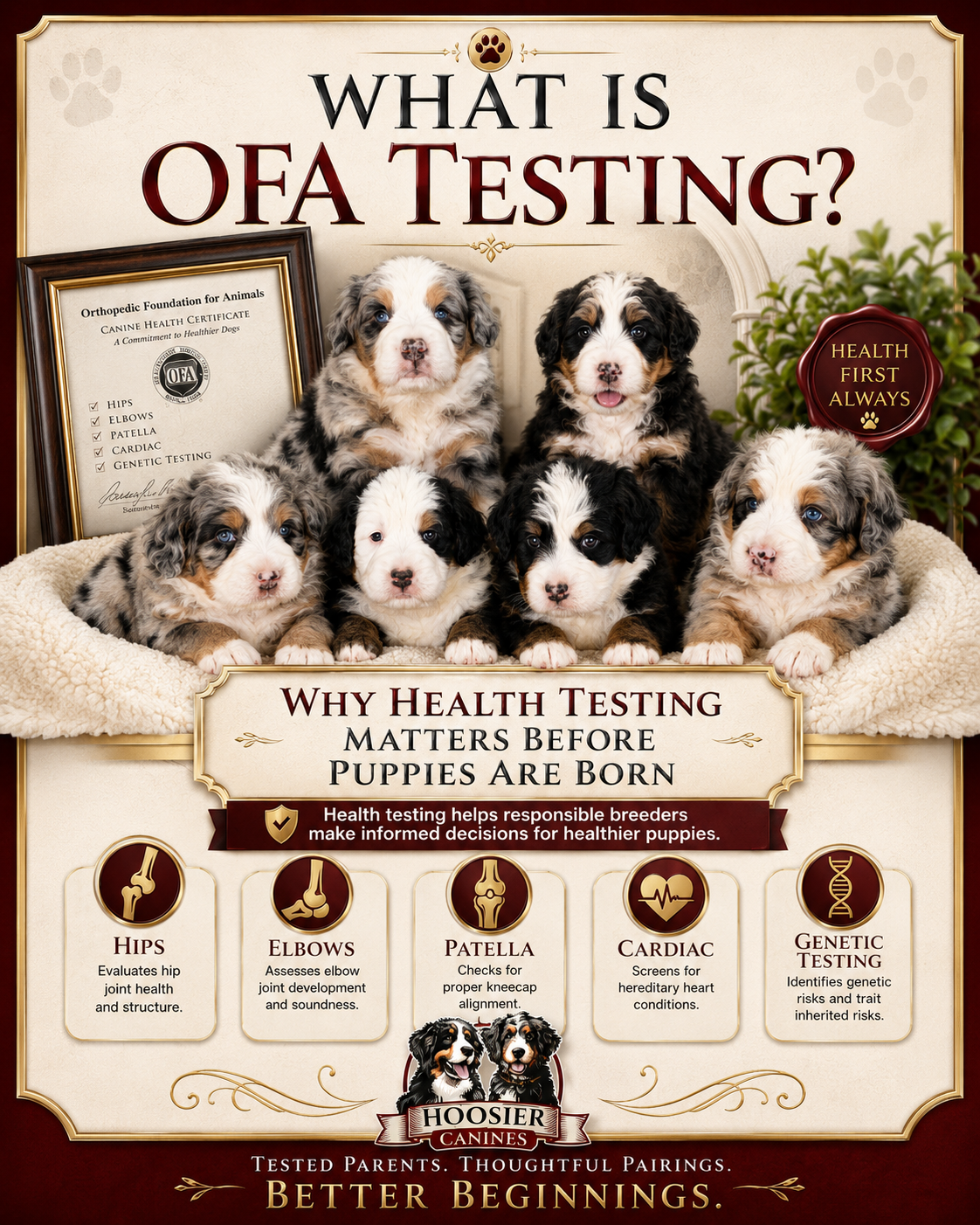
A puppy’s health starts long before go-home day. It starts with the parent dogs, the pairing, and the standards used before a litter is ever planned. When a breeder skips testing, they are often relying on appearances, assumptions, or luck. When a breeder tests, they are working with real information.

OFA testing helps breeders identify potential hereditary health concerns and make better pairing decisions. It can help reduce the risk of passing certain orthopedic or cardiac conditions to puppies, especially when combined with genetic testing and careful knowledge of the breed lines involved. It also gives families more transparency, which is exactly what puppy buyers should expect from a responsible breeder.

For families searching for a health tested Bernedoodle breeder, ethical Bernedoodle breeder, or Bernedoodle breeder in Indiana, health testing should be part of the conversation. It is not the only thing that matters, but it is one of the clearest signs that the breeder is thinking past the sale and caring about the long-term life of the dog.

OFA Hip Evaluations

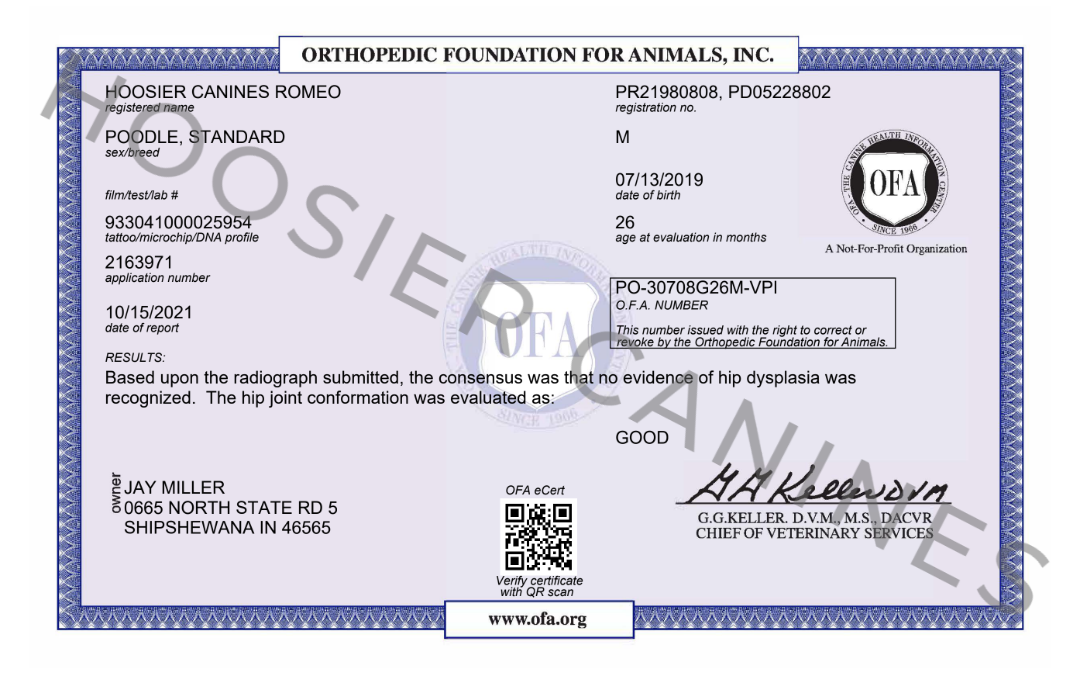
Hip health is especially important in many medium and large breed dogs, including Bernese Mountain Dogs and Bernedoodles with Bernese influence. Hip dysplasia can affect comfort, mobility, and quality of life as a dog grows, especially if the dog develops pain, looseness, or arthritis in the joints.

An OFA hip evaluation uses X-rays to assess the structure and fit of the hip joints. The results help breeders understand whether a parent dog has strong hip structure or signs of hip dysplasia. OFA hip results may be graded as Excellent, Good, Fair, Borderline, Mild Dysplasia, Moderate Dysplasia, or Severe Dysplasia.

At Hoosier Canines, hip results are one part of a larger breeding decision. A dog is never chosen for breeding based on one piece of information alone. Health testing, temperament, structure, genetics, and the overall purpose of the pairing all matter.

OFA Elbow Evaluations

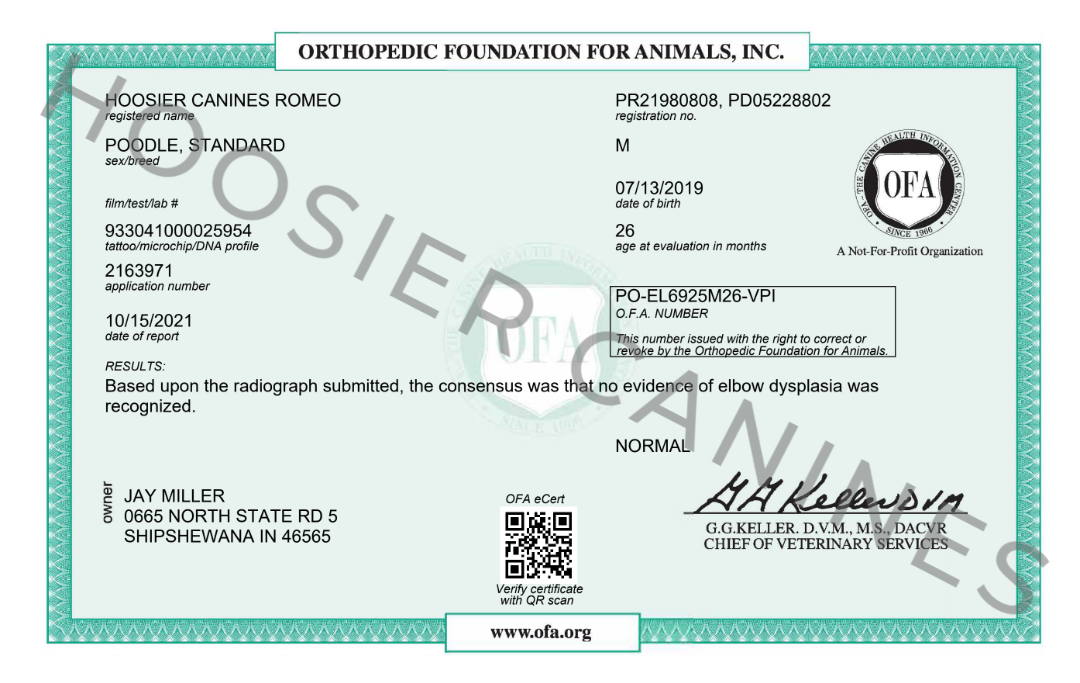
Elbow health is another important piece of responsible breeding, especially for medium and larger dogs. Elbow dysplasia can lead to stiffness, pain, lameness, and arthritis over time, which is why breeders should pay attention to elbow structure before planning future litters.

OFA elbow evaluations check the elbow joints for inherited abnormalities. Clear elbow results help reduce the chance of producing puppies predisposed to joint problems that may affect movement later in life. This is one reason health testing should never be treated like a marketing extra. It is part of protecting the puppies being raised and the families who will love them.

OFA Patella, Or Knee, Evaluations

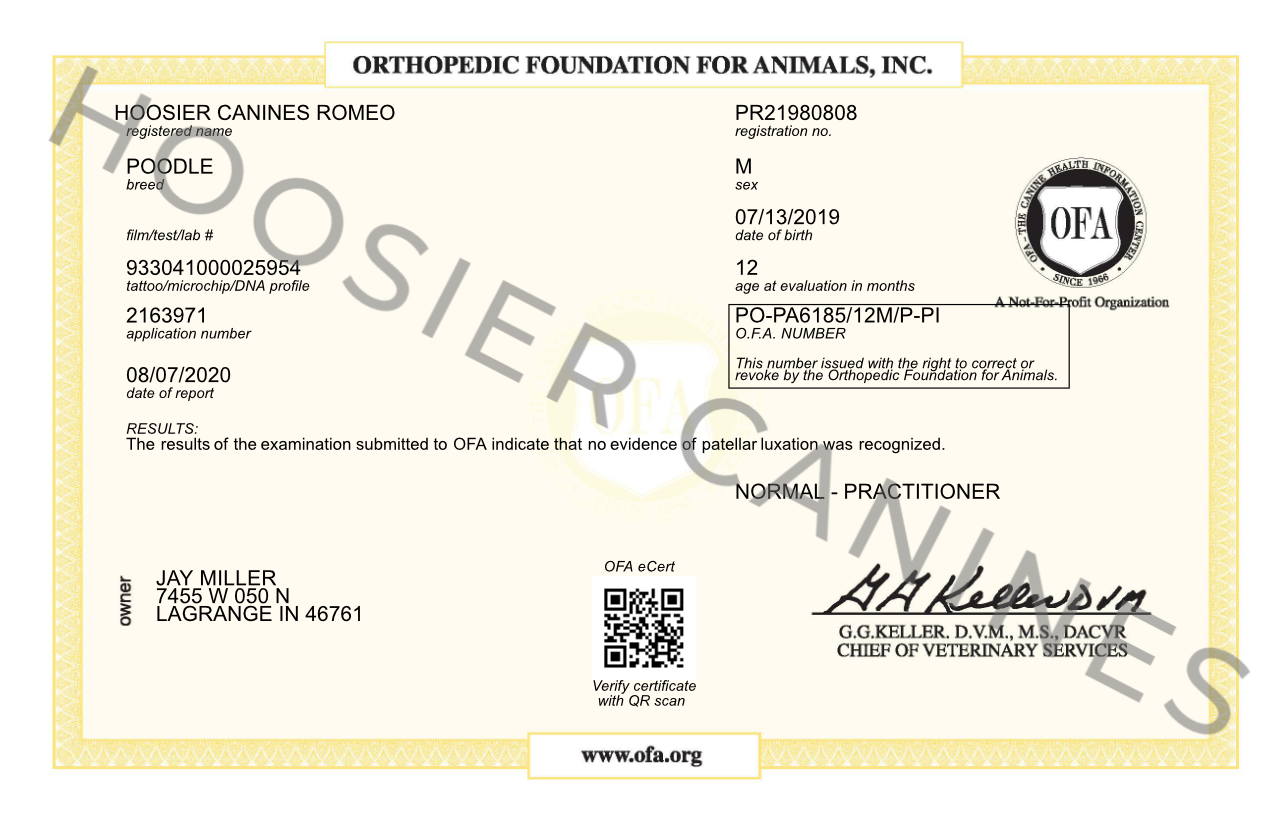
The patella is the kneecap, and patellar luxation happens when the kneecap moves out of its normal position. This condition can occur in smaller and medium-sized dogs, which makes patella testing especially important when Poodle lines, Mini Bernedoodles, or smaller breeding dogs are part of a program.

An OFA patella evaluation checks whether the knees are stable and functioning properly. Healthy knees support comfort, movement, and long-term soundness. For puppy buyers, this kind of testing shows that the breeder is paying attention to more than just the traits people can see in photos.

OFA Cardiac Evaluations

Heart health is another important part of a complete breeding program. OFA cardiac testing helps screen for congenital heart concerns that could potentially be passed down through breeding lines.

These evaluations are performed by qualified veterinary professionals and help determine whether a dog is a responsible candidate for breeding. For families, cardiac testing adds another layer of confidence when choosing a puppy from health tested parents. It shows that the breeder is looking at the parent dog’s overall health, not just coat, color, or personality.

Genetic Testing And Paw Print Genetics

OFA testing looks at a dog’s physical health and structure. Genetic testing looks at the dog’s DNA. Both have a place in responsible breeding, and together they give breeders a more complete understanding of the dogs in their program.

At Hoosier Canines, we use genetic screening through trusted laboratories such as Paw Print Genetics. Genetic testing can help identify whether a dog is clear, a carrier, or affected for certain inherited conditions. This information allows breeders to avoid pairings that could produce affected puppies and to make smarter decisions with each generation.

A carrier result does not automatically mean a dog is unhealthy or should never be bred. Genetics are more detailed than that. What matters is whether the breeder understands the results and pairs dogs responsibly. 

What Health Testing Does Not Guarantee

Health testing is important, but it does not guarantee perfection. A puppy can come from health tested parents and still develop a medical issue at some point in life. That is true for every breed, every breeder, and every dog.

What health testing does mean is that the breeder took responsible steps before breeding. It means parent dogs were evaluated, results were reviewed, and the pairing was made with intention instead of guesswork. That is the difference between simply producing puppies and building a thoughtful breeding program.

Families should also understand that long-term health does not stop with the breeder. Nutrition, exercise, growth rate, grooming, veterinary care, and the home environment all matter. A strong start is powerful, but it should be supported by good care throughout the dog’s life.

Why Hoosier Canines Tests Parent Dogs

At Hoosier Canines, we are not just looking for good-looking dogs. We are looking for parent dogs with the right combination of health, temperament, structure, genetics, coat traits, size, and family-friendly qualities.

Every parent dog is carefully considered before becoming part of our program. We review health testing, genetic screening, temperament, pedigree information when available, and how that dog fits into our breeding goals. Our puppies are raised with care, early handling, and socialization, but strong beginnings start with the parents.

That is why health testing matters so much to us. It helps us protect the integrity of our program, support better outcomes for our puppies, and give families a clearer understanding of the care behind each litter.

What Puppy Buyers Should Ask Breeders

If you are searching for puppies, do not be afraid to ask about health testing. A responsible breeder should be willing to talk through their program and explain what testing has been completed on the parent dogs.

Good questions include:

  • Are the parent dogs OFA tested?
  • Which OFA evaluations have been completed?
  • Have the parents had genetic testing?
  • Can I review health certificates or records?
  • What inherited conditions are common in the parent breeds?
  • How do you decide which dogs are paired together?
  • What temperament traits are you breeding for?
  • How are the puppies raised and socialized before going home?
 

The answers will tell you a lot. A good breeder will not rush you past the important details. They will help you understand them, because informed families are better prepared for the puppy they bring home.

Puppy Header Scaled E1770882924141

Health Tested Parents, Better Beginnings

Choosing a puppy is exciting, but it should also be thoughtful. Color, coat, size, and markings are easy to notice first, but health and temperament matter far more over the life of the dog.

OFA testing, genetic screening, and responsible parent selection help give puppies a stronger foundation. They also give families more confidence when choosing where their puppy comes from. At Hoosier Canines, we are proud to be a health-focused breeder in LaGrange, Indiana, raising puppies with care, transparency, and purpose.

If you are ready to learn more, you can browse our parent dogs, view available Bernedoodle puppies, or start the adoption process with Hoosier Canines.

Bernedoodles VS Doodles

Bernedoodles and Goldendoodles are highly trainable due to their intelligence and eagerness to learn, making positive reinforcement training methods highly effective. Bernedoodles are particularly easy to train and often make great service dogs. Goldendoodles’ accommodating and laid-back personality traits simplify training, especially for first-time dog owners.

×

Table of Contents

Stay in the loop