Puppy First-Year Vaccines: Schedule, Timing & What to Expect
What to Expect and Why It Matters
Bringing home a puppy is exciting. It is also the beginning of some very important health milestones, and one of the biggest is your puppy’s vaccine schedule.
During the first few months of life, a puppy’s immune system is still developing. Vaccines help build protection over time, which is why puppies need a series of appointments instead of just one shot. The American Animal Hospital Association and the AVMA both note that puppy vaccines are typically started around 6 to 8 weeks of age and repeated every 2 to 4 weeks until at least 16 weeks old.
Why Puppies Need More Than One Round of Vaccines
One of the most common questions new owners ask is, “If my puppy already had a shot, why do they need more?”
The answer usually comes down to maternal antibodies. Puppies receive early immune protection from their mother, but those antibodies fade at different rates from one puppy to the next. That can interfere with how well an early vaccine works, which is why the vaccine series is spaced out over several visits. The goal is to create reliable protection once those maternal antibodies are low enough for the vaccine to do its job well.
What Vaccines Are Usually Included
Most puppies start with core vaccines, which are recommended for all dogs. AAHA identifies the core puppy series as protection against distemper, adenovirus, parvovirus, parainfluenza, and rabies.
A typical first-year vaccine plan often includes:
- DA2PP or DAPP for distemper, adenovirus, parvovirus, and parainfluenza
- Rabies at the age required by your veterinarian and local law
Lifestyle-based vaccines such as leptospirosis, Bordetella, Lyme, or canine influenza when risk factors make them appropriate. Not every puppy needs every non-core vaccine. Your veterinarian will recommend those based on where you live, your puppy’s environment, boarding plans, travel, and exposure to other dogs.
A General Puppy Vaccine Timeline
Every puppy is a little different, but this is the pattern many families can expect:
- 6 to 8 weeks: first core vaccine appointment often begins
- Every 2 to 4 weeks after that: booster visits continue
- By 16 weeks or older: final vaccine in the puppy series is usually given
- Rabies: commonly given during the later puppy visits, based on veterinary guidance and legal requirements
- About 1 year later: a follow-up booster is often recommended after the initial series
That schedule matters. AVMA notes that staying on the recommended timeline helps reduce the chance of a gap in protection.
When Is a Puppy Fully Protected?
This is where expectations should stay realistic. For most puppies, protection is not considered complete until after the final vaccine in the series, which is usually given at 16 weeks of age or later.
That means the early months require a little extra care. Parvovirus and other contagious illnesses can be especially dangerous for young puppies before the full series is finished.
Socialization Still Matters During This Window
Being cautious does not mean keeping your puppy hidden away from the world. Early socialization is still important for healthy behavior development. AVMA notes that socialization should begin during the sensitive early period, and puppies can safely gain experience through controlled exposure to clean environments, healthy people, and well-vaccinated dogs.
A safer approach during the vaccine series looks like this:
- Arrange playtime with healthy, vaccinated dogs you know
- Avoid public dog parks until your vet says your puppy is ready
- Keep visits to clean, lower-risk environments
- Focus on positive exposure to sounds, surfaces, people, and routines at home and in safe settings
That balance matters. You want to protect both physical health and emotional development.
What to Expect at Vaccine Appointments
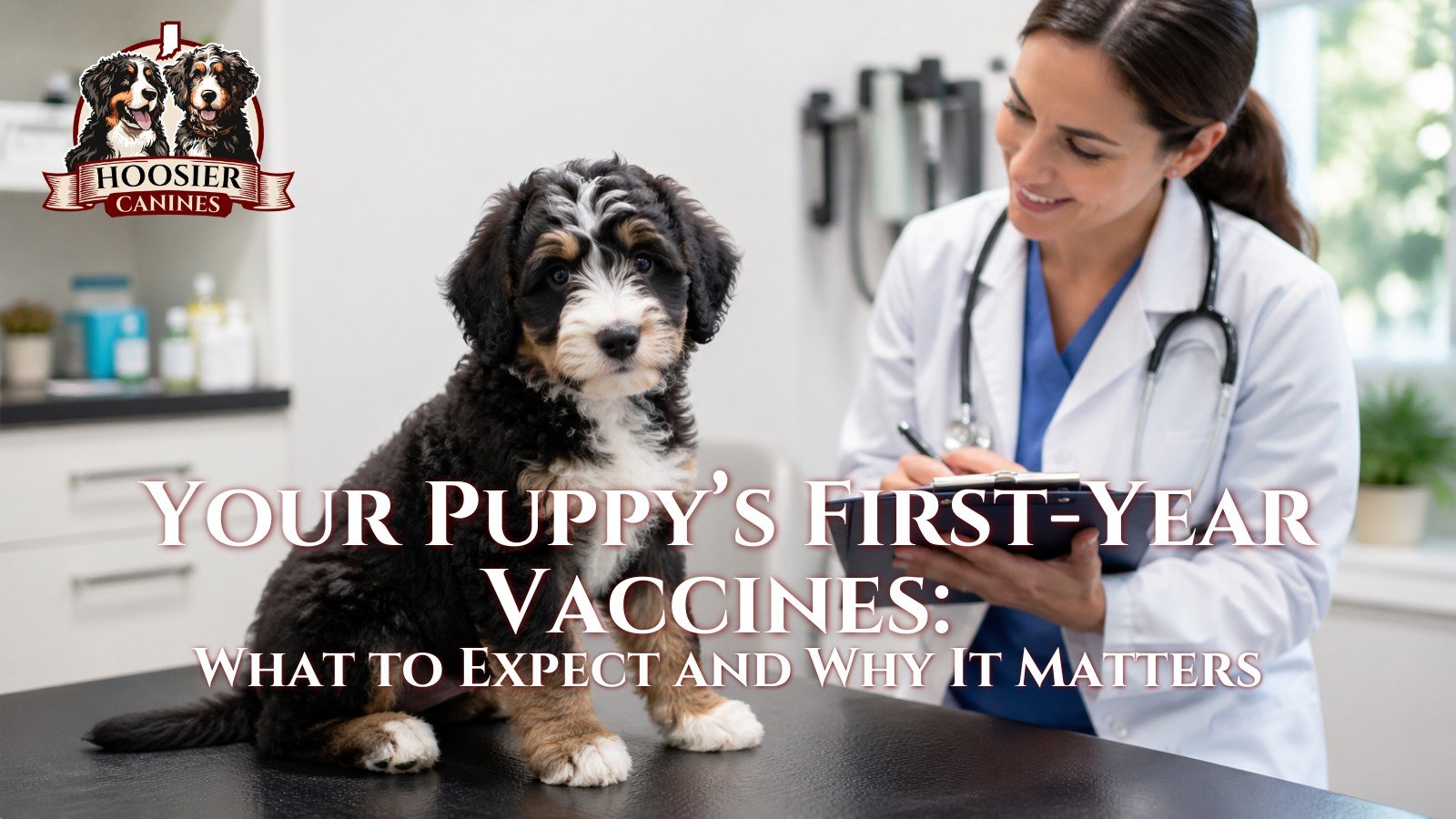
For many new puppy owners, the appointments themselves can feel like a mystery. In most cases, your veterinarian will do more than just administer a shot. Puppy wellness visits often include:
- A general physical exam
- Weight tracking and growth checks
- Parasite screening or prevention discussion
- Vaccine planning based on age and lifestyle
- Time for your questions about food, training, behavior, and routines
This is how your long-term health plan begins. Not with one visit, but with a series of thoughtful steps.
Multi-Gen, Ultra, and Mini Bernedoodles
Featured Puppies For Adoption
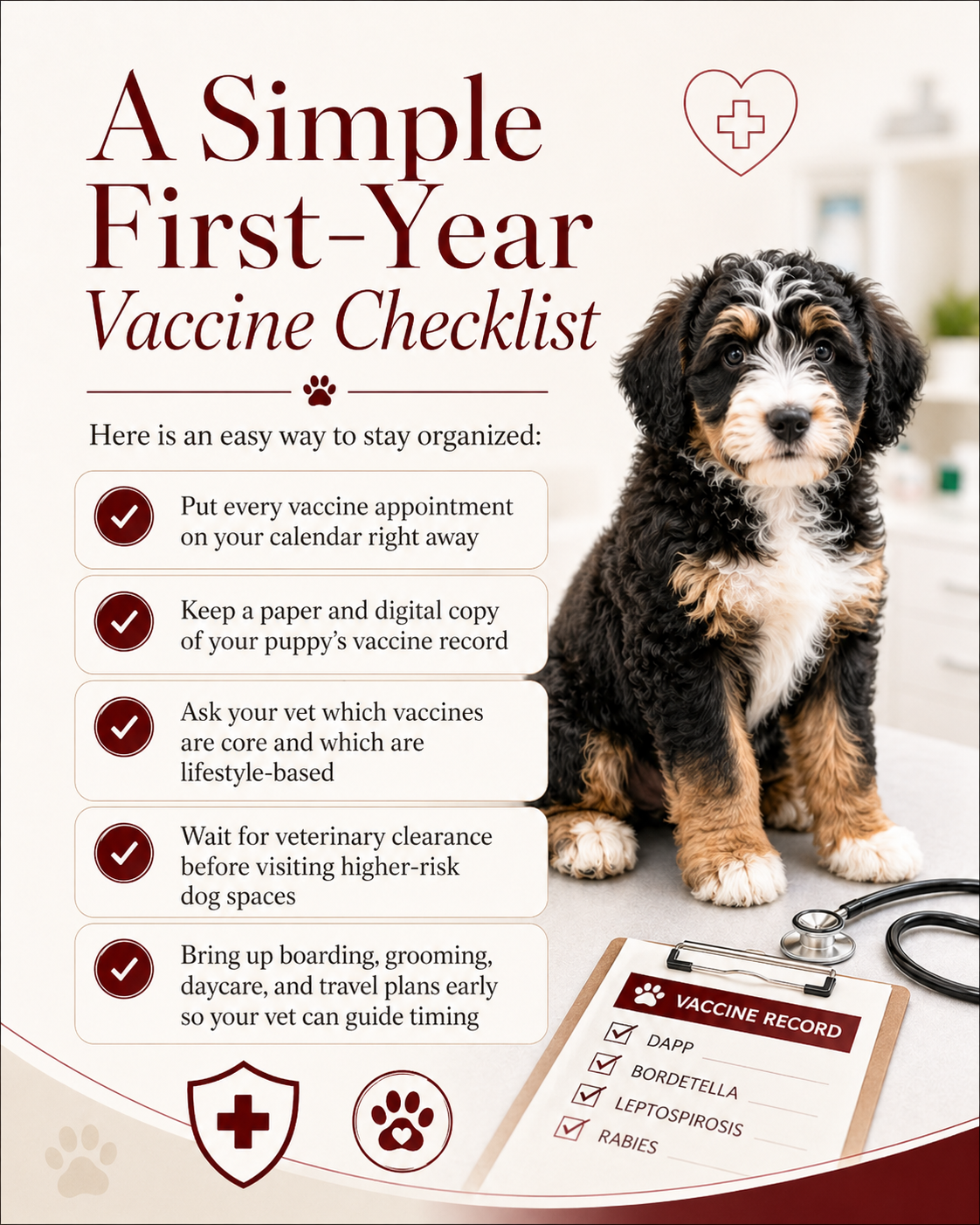
A Simple First-Year Vaccine Checklist
Here is an easy way to stay organized:
- Put every vaccine appointment on your calendar right away
- Keep a paper and digital copy of your puppy’s vaccine record
- Ask your vet which vaccines are core and which are lifestyle-based
- Wait for veterinary clearance before visiting higher-risk dog spaces
Bring up boarding, grooming, daycare, and travel plans early so your vet can guide timing